Role
Lead Product Designer
Year
2023–2026
Turned chaotic design into a repeatable process
A Coinspaid’s B2B platform serving merchants, payment operators, and crypto transactions across Europe.
A Jira board full of unscored requests and no shared criteria for what to tackle next.
The product was real and growing. The infrastructure to design it well didn’t exist yet.
Challenge
Clients
- 01
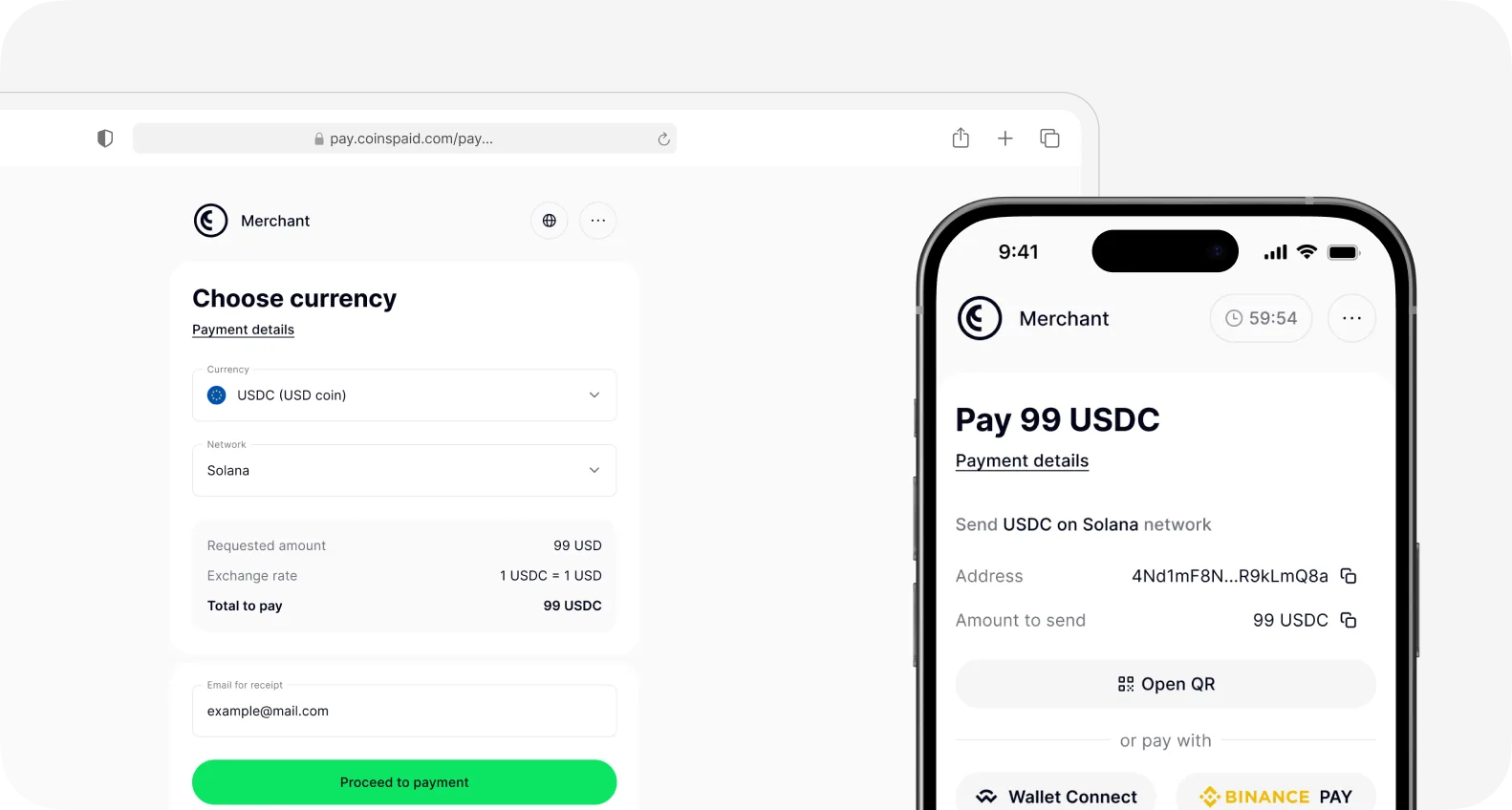
Merchants creating invoices couldn’t tell which payment method to use.
- 02
End customers hit timeouts, partial payment states, and overpayments with no clear path to resolution.
- 03
The merchant creation form had fields nobody needed.
Business
- 01
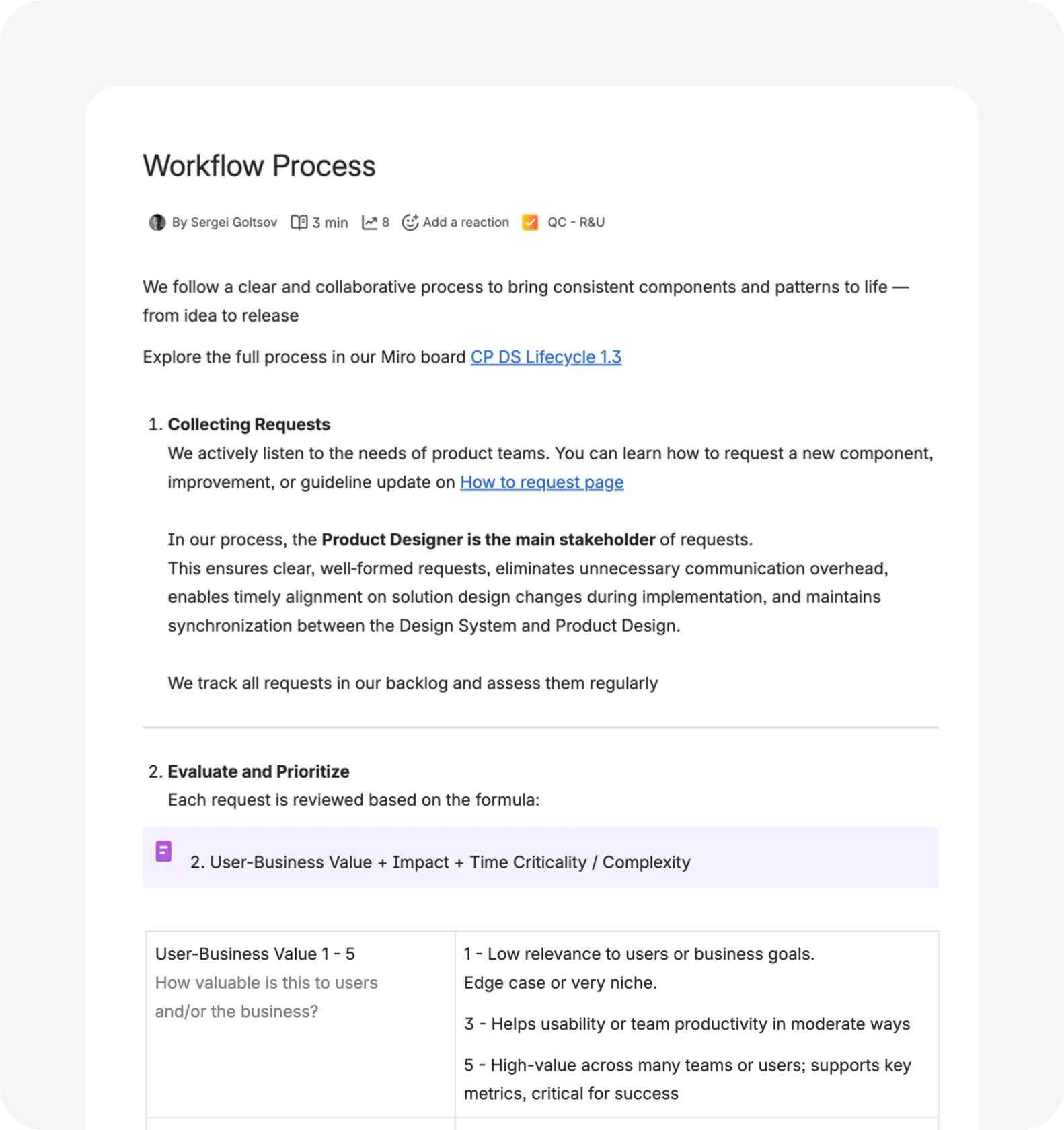
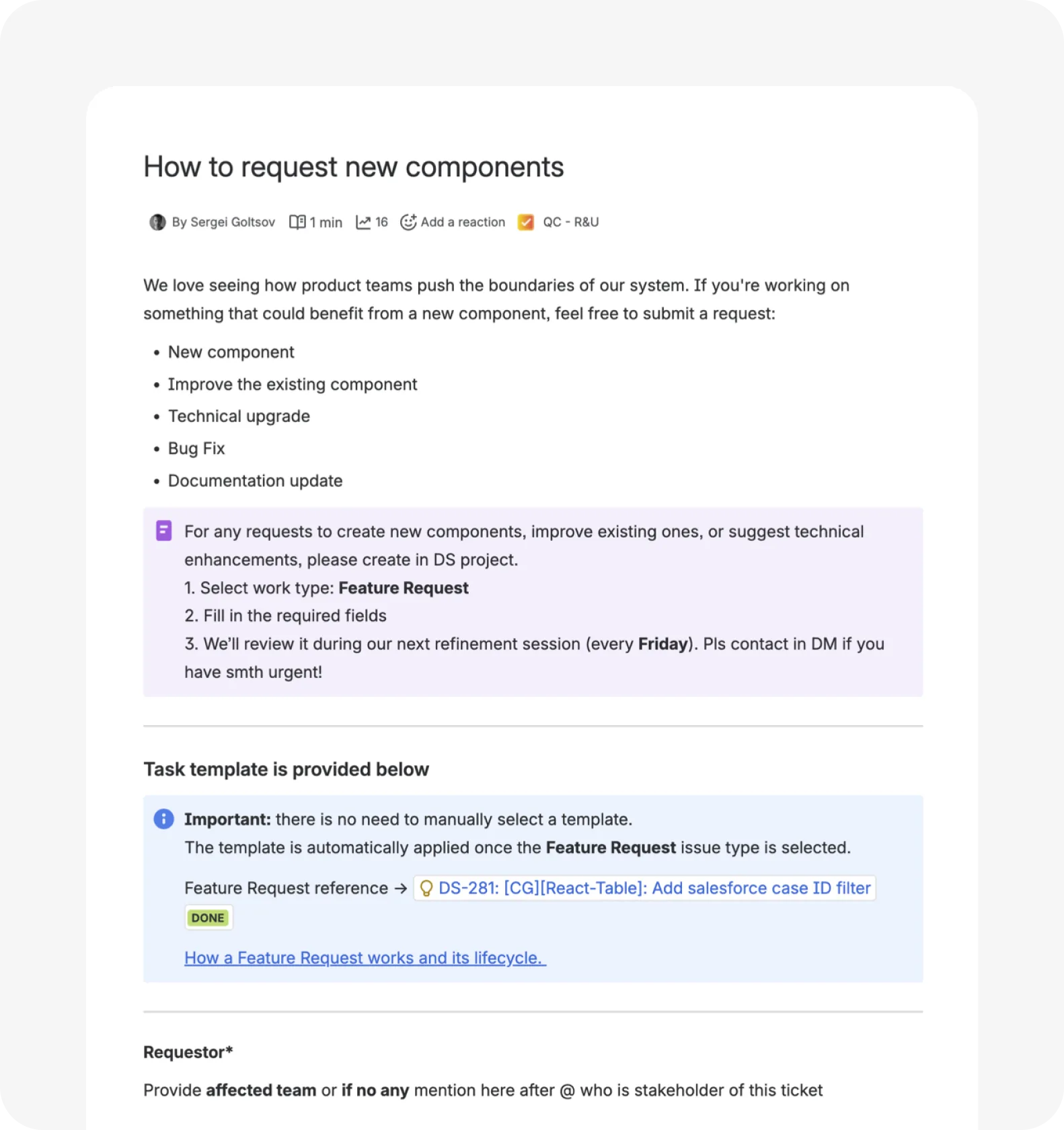
Design requests arrived without priority, context, or scoring. The backlog had 84 items when first measured.
- 02
Features shipped without analytics instrumentation. No metric had an owner.
- 03
Work started in Figma before anyone confirmed what problem was actually being solved.
Building the lifecycle
- 01
Before: a PM sent a task, the designer designed, it went to development. No discovery, no design review, no results loop.
- 02
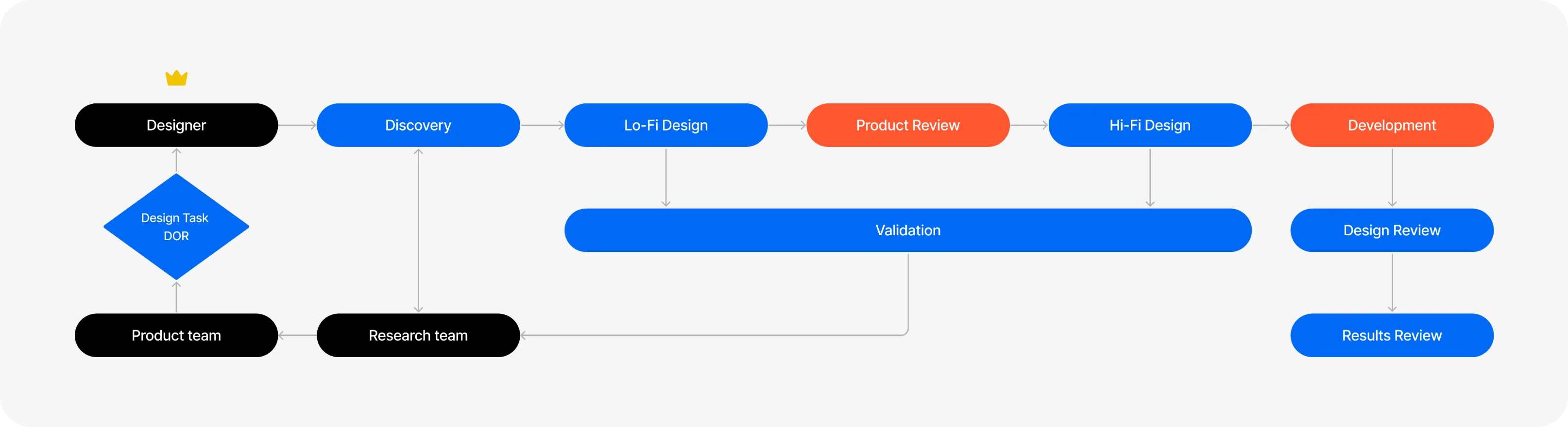
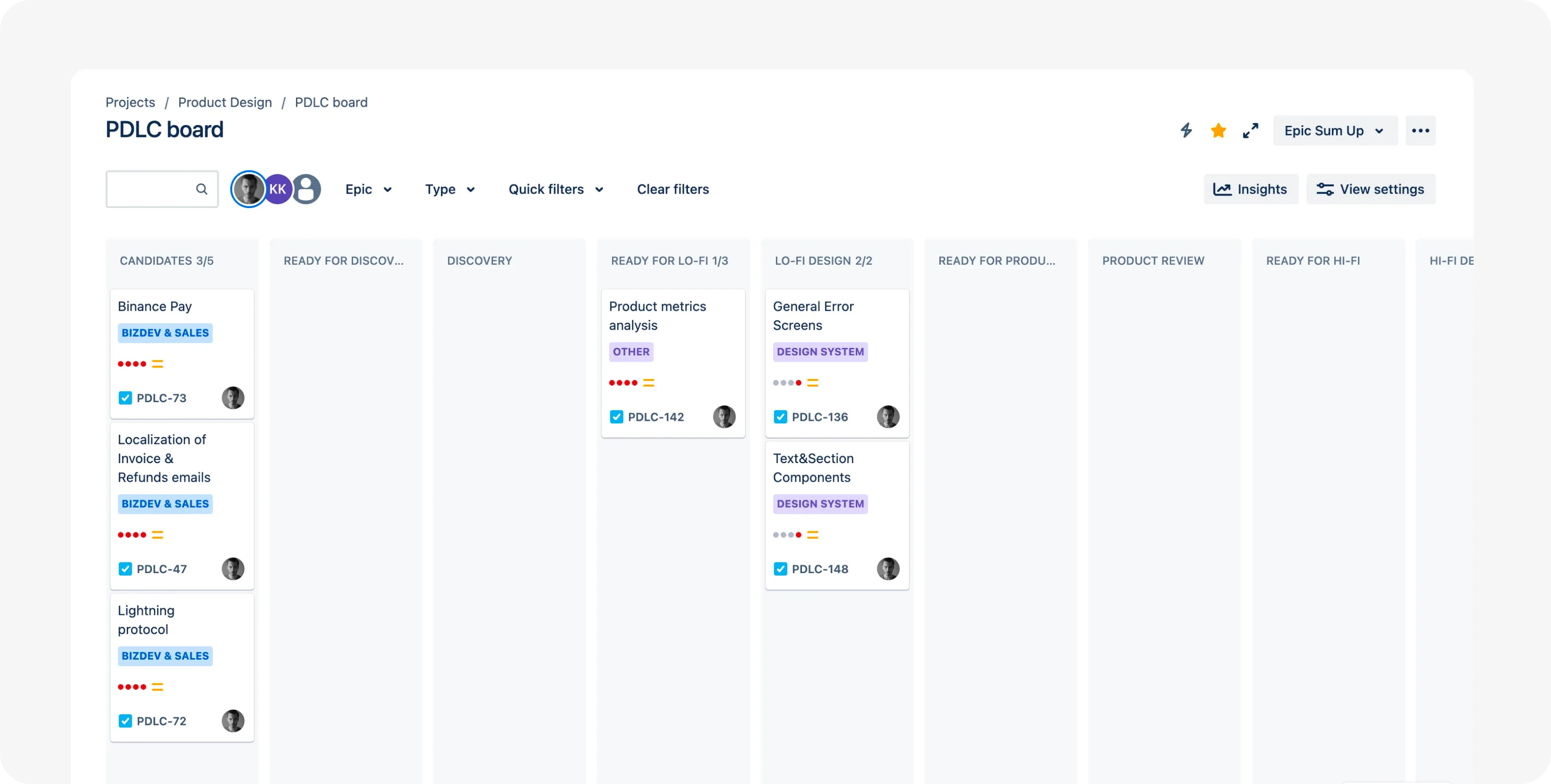
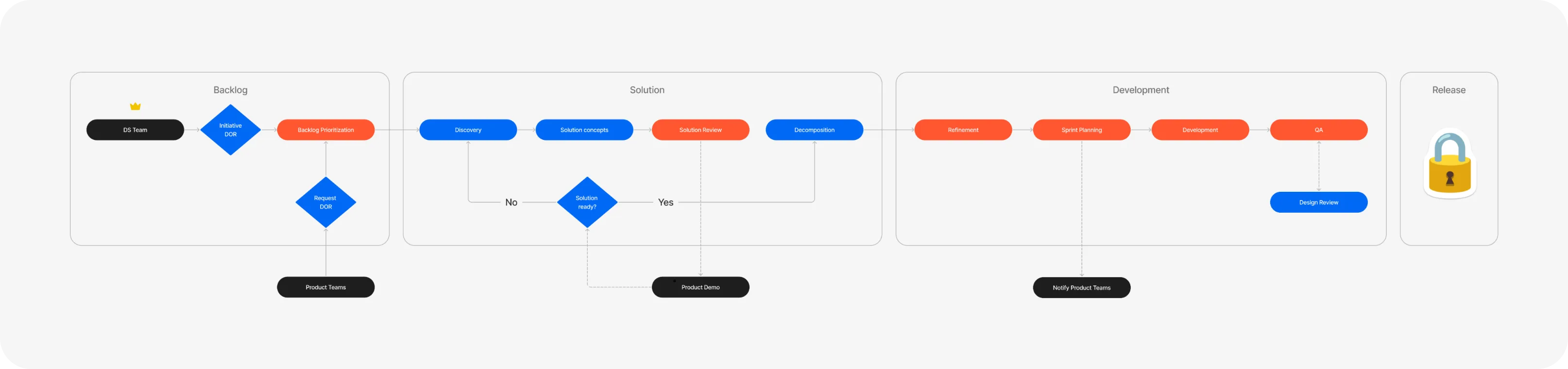
Built a 7-stage lifecycle. The stages that didn’t exist before: Discovery, Product Review, Design Review, Results Review.
Lifecycle stages
- 01
Discovery came first. Before opening Figma, the designer had to understand what problem was actually being solved and what success looked like.
- 02
Product Review sat between Lo-Fi and Hi-Fi design. PM, analysts, and developers reviewed direction before anyone touched final screens. Developers flagged technical constraints early. No surprises at handoff.
- 03
Design Review was mandatory. The gate that made sure nothing went to development half-finished.
- 04
Results Review closed the loop. After every ship, the design team saw what moved. Knowing what worked is what makes the next decision better.
Built the design system
- 01
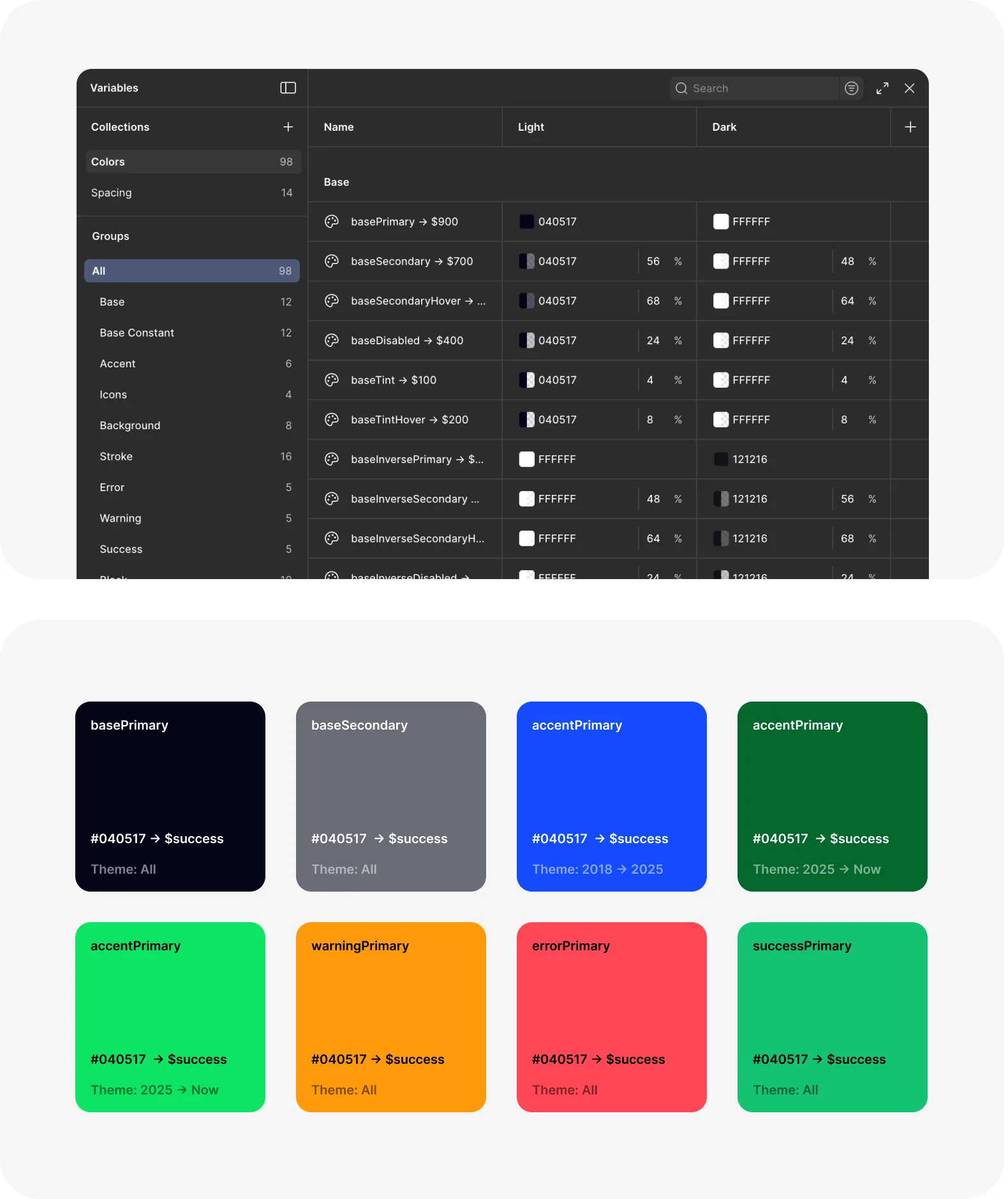
Figma components and Storybook components didn’t talk to each other. Light and dark themes existed in code but had no connection to Figma.
- 02
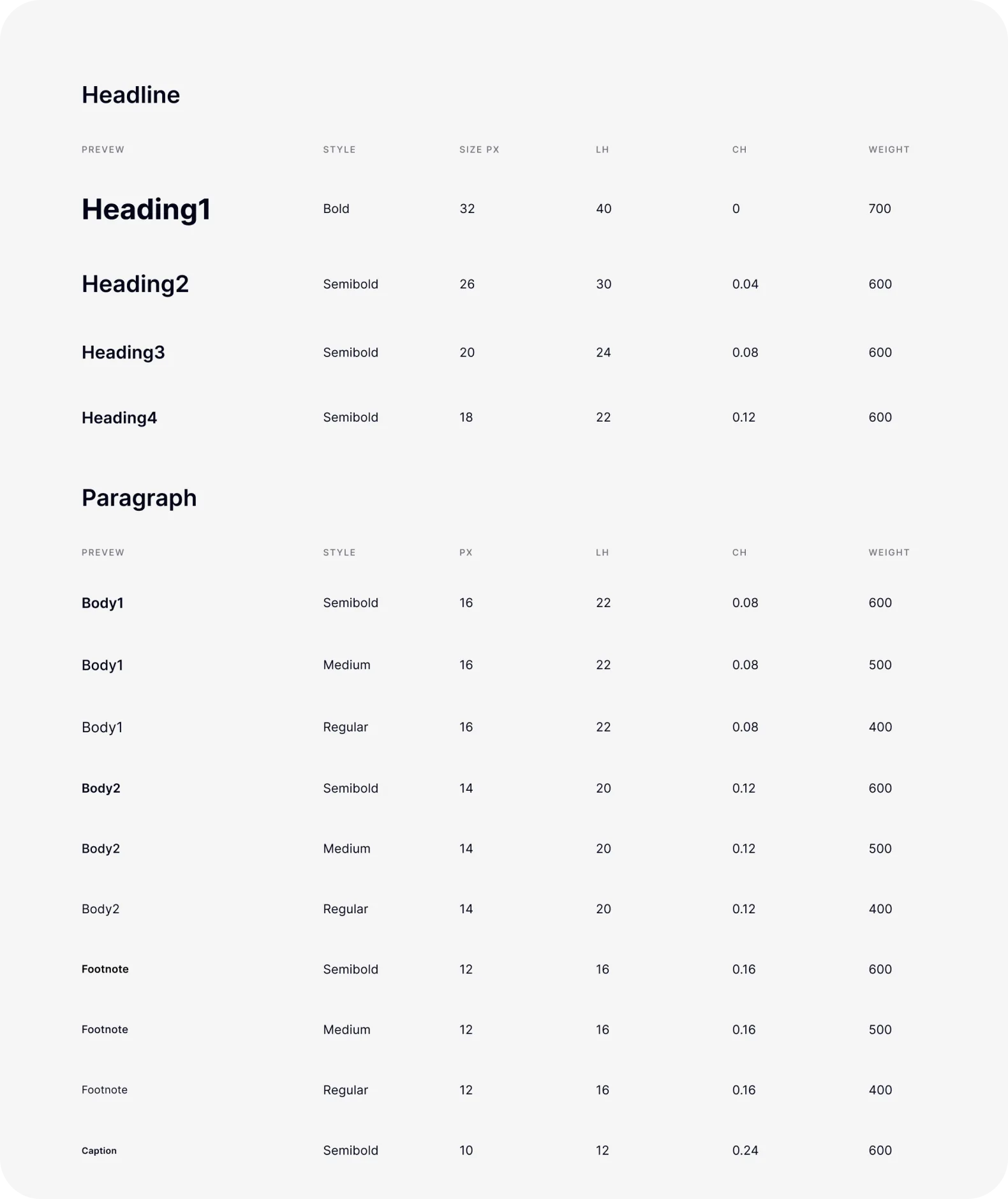
Started with tokens: color, spacing, layout grids, typographic scales. Named them to match the codebase so engineers could read them without translation.
Icons library
- 01
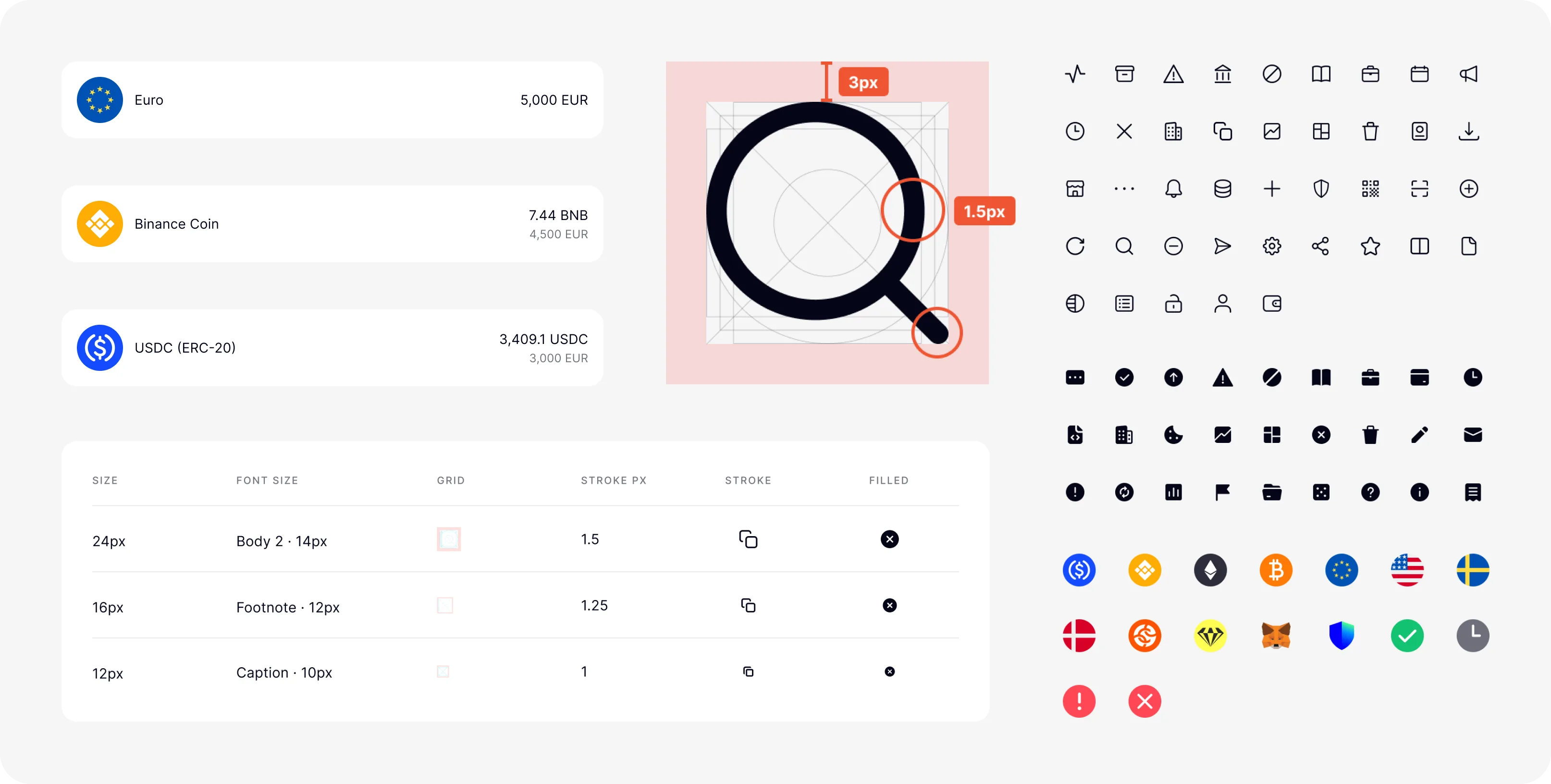
Built a library with two types: fixed-size outline and filled icons at 12, 16, and 24px, and multicolor icons scaling the full 12–64px grid.
- 02
Developers pulled them via API directly into their repository.
- 03
Added a creation guideline so new icons followed the same rules without a review every time.
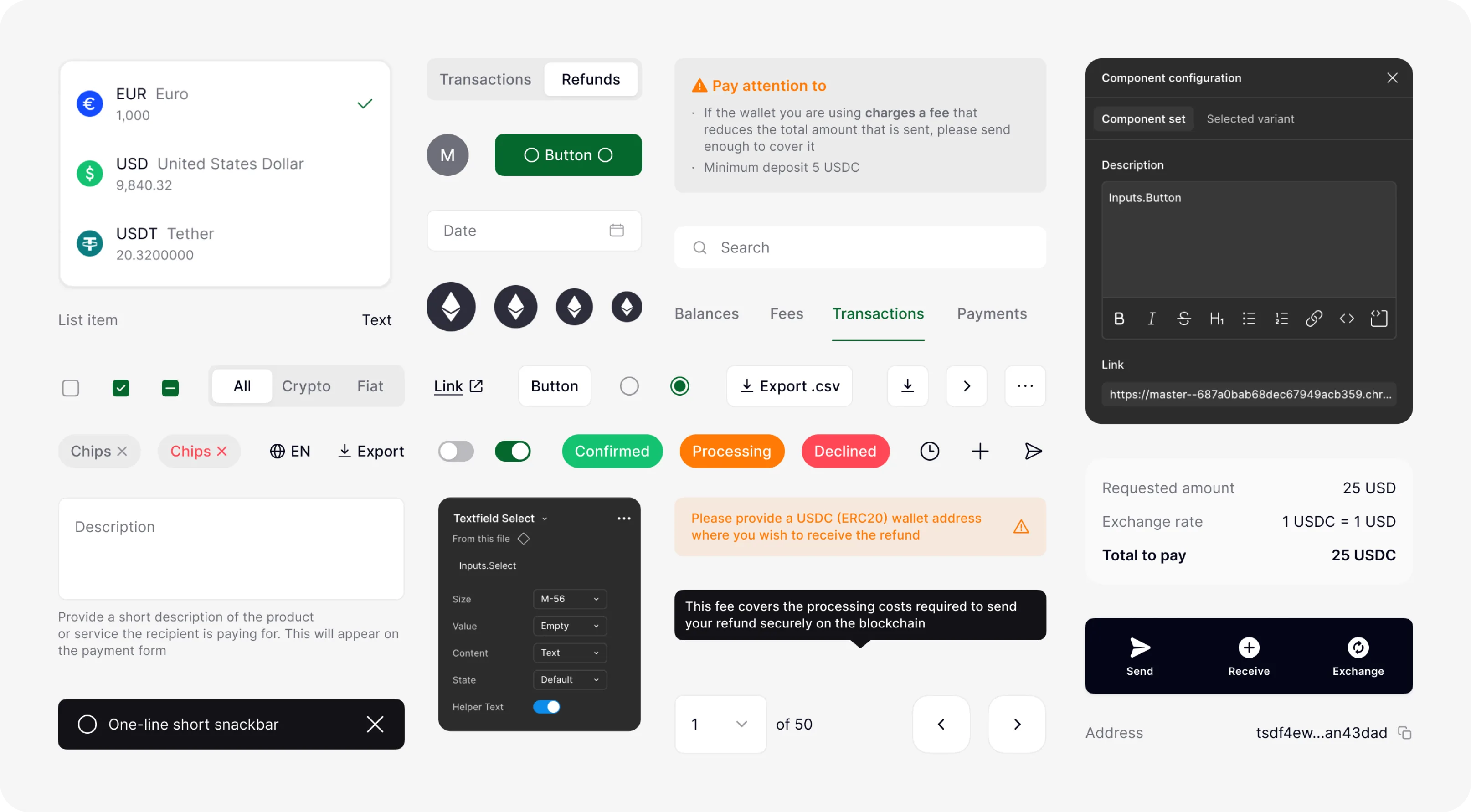
Components Library
- 01
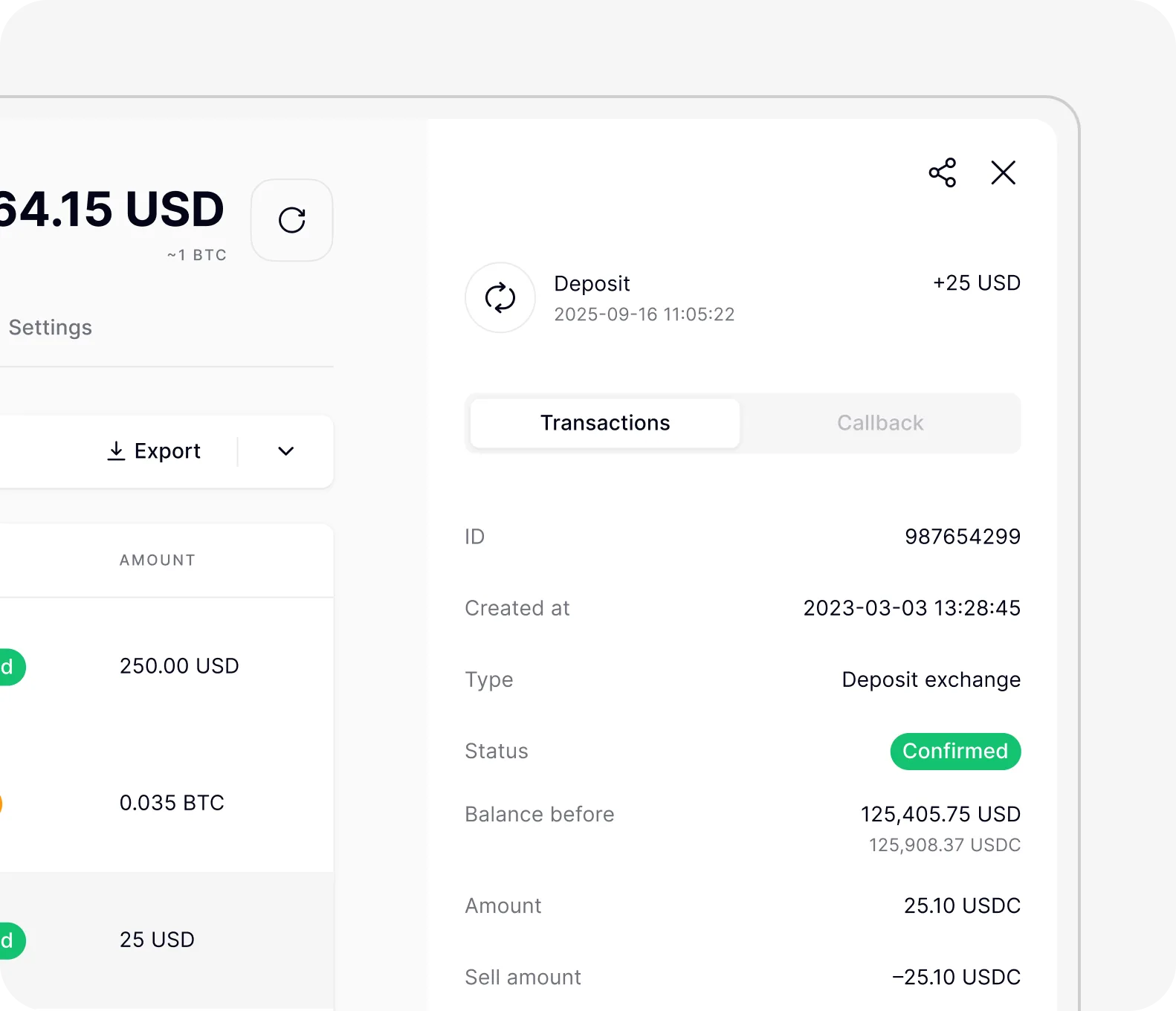
Rebuilt the library flat and easy to navigate.
- 02
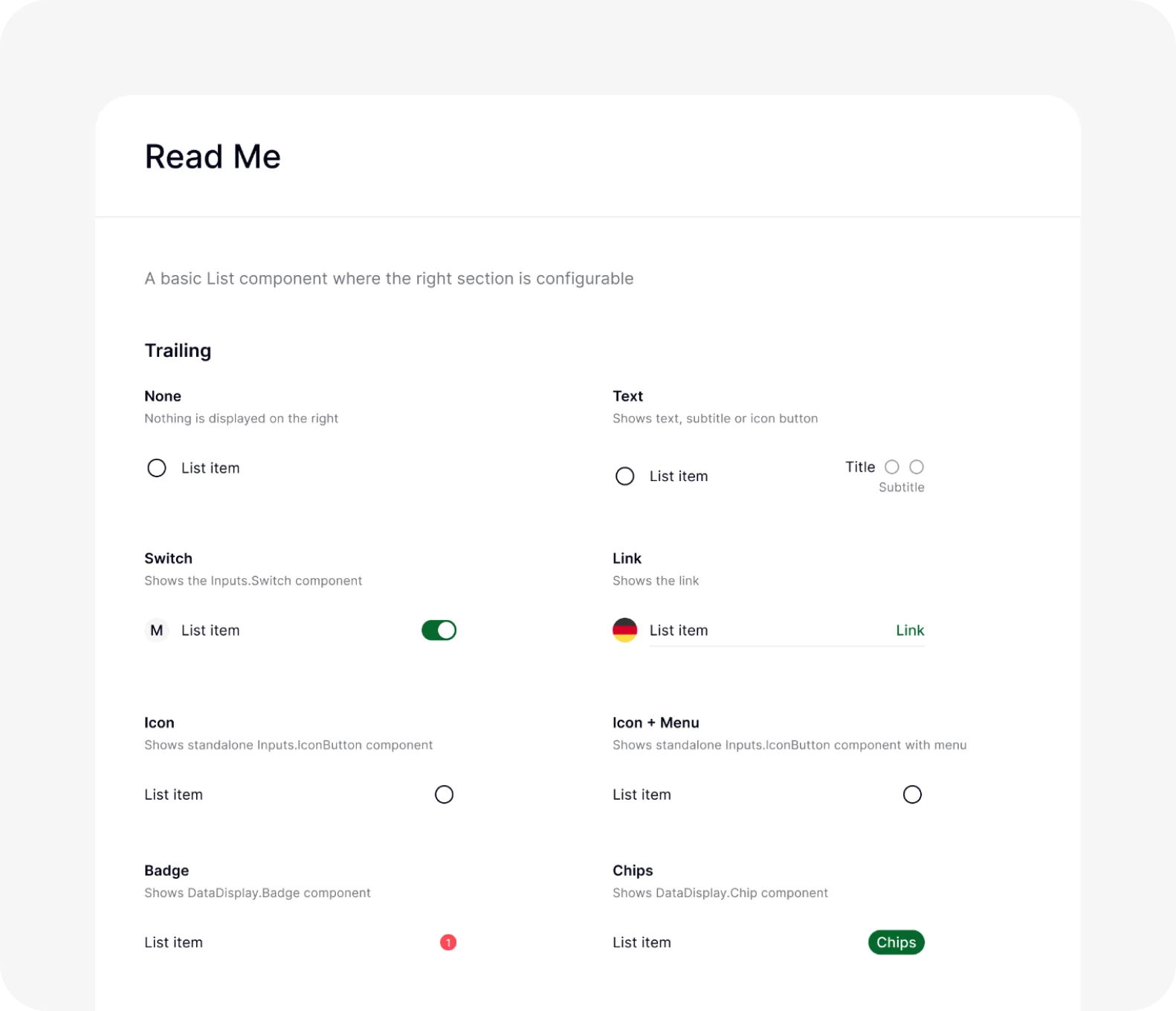
Linked each component to its Storybook counterpart. An engineer could jump from Figma straight to the right Storybook entry.
Made design-engineering talk less painful
- 01
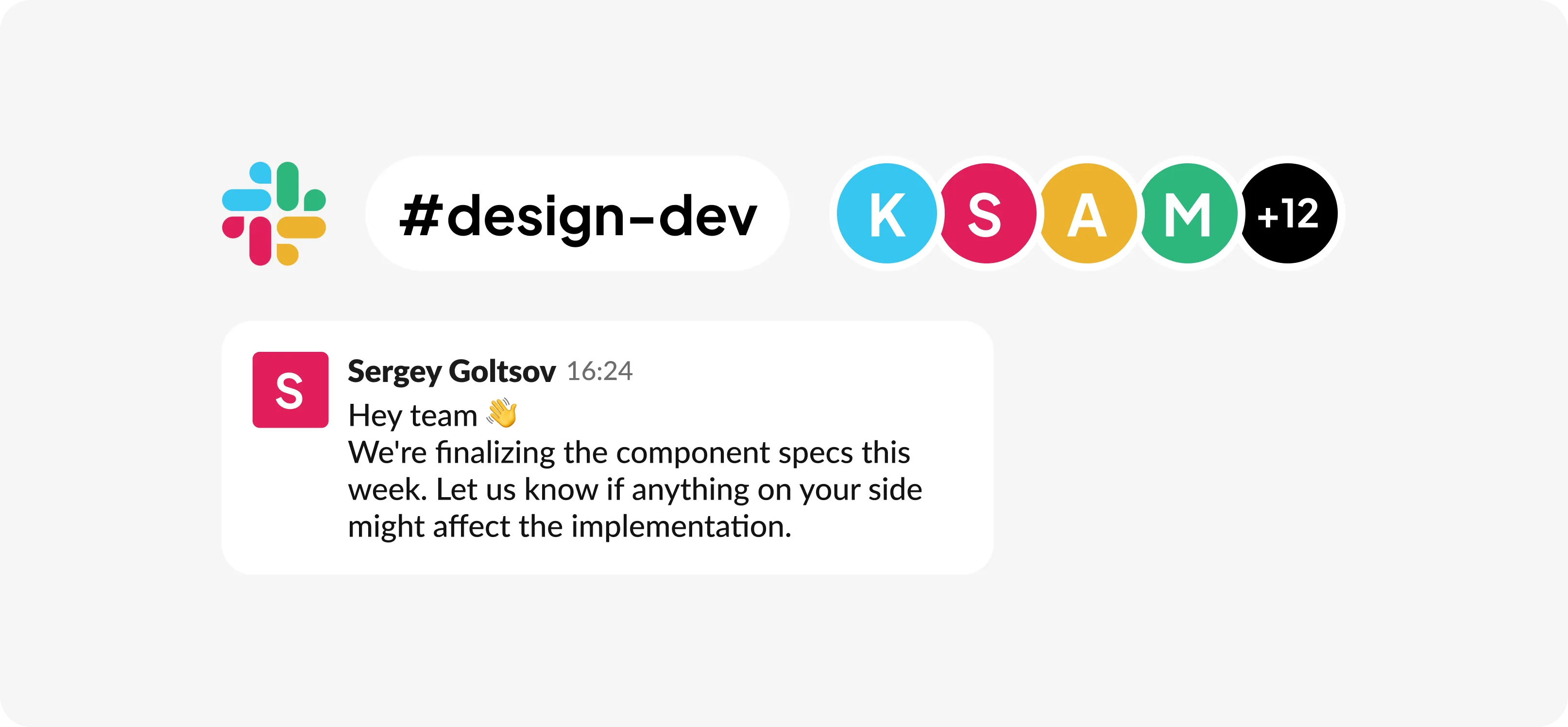
Set up a #design-dev channel for designers and frontend engineers across product teams.
- 02
Annual surveys: less back-and-forth, fewer discrepancies at handoff.
Launched dedicated Design System team
- 01
Built the case for hiring, got it approved, owned the full cycle: job spec, hiring stages, interview scorecard.
- 02
Onboarded each designer through a structured Confluence space covering product context, process, tooling, and design system.
- 03
The team launched: me as designer and content lead, the lead frontend engineer, one frontend engineer, and QA. Later a release manager joined and took over meetings, Jira, and timelines. That freed me to focus on what we were building and why.
Growing the design team
- 01
Built the case for hiring, got it approved, owned the full cycle: job spec, hiring stages, interview scorecard.
- 02
Onboarded each designer through a structured Confluence space covering product context, process, tooling, and design system.
- 03
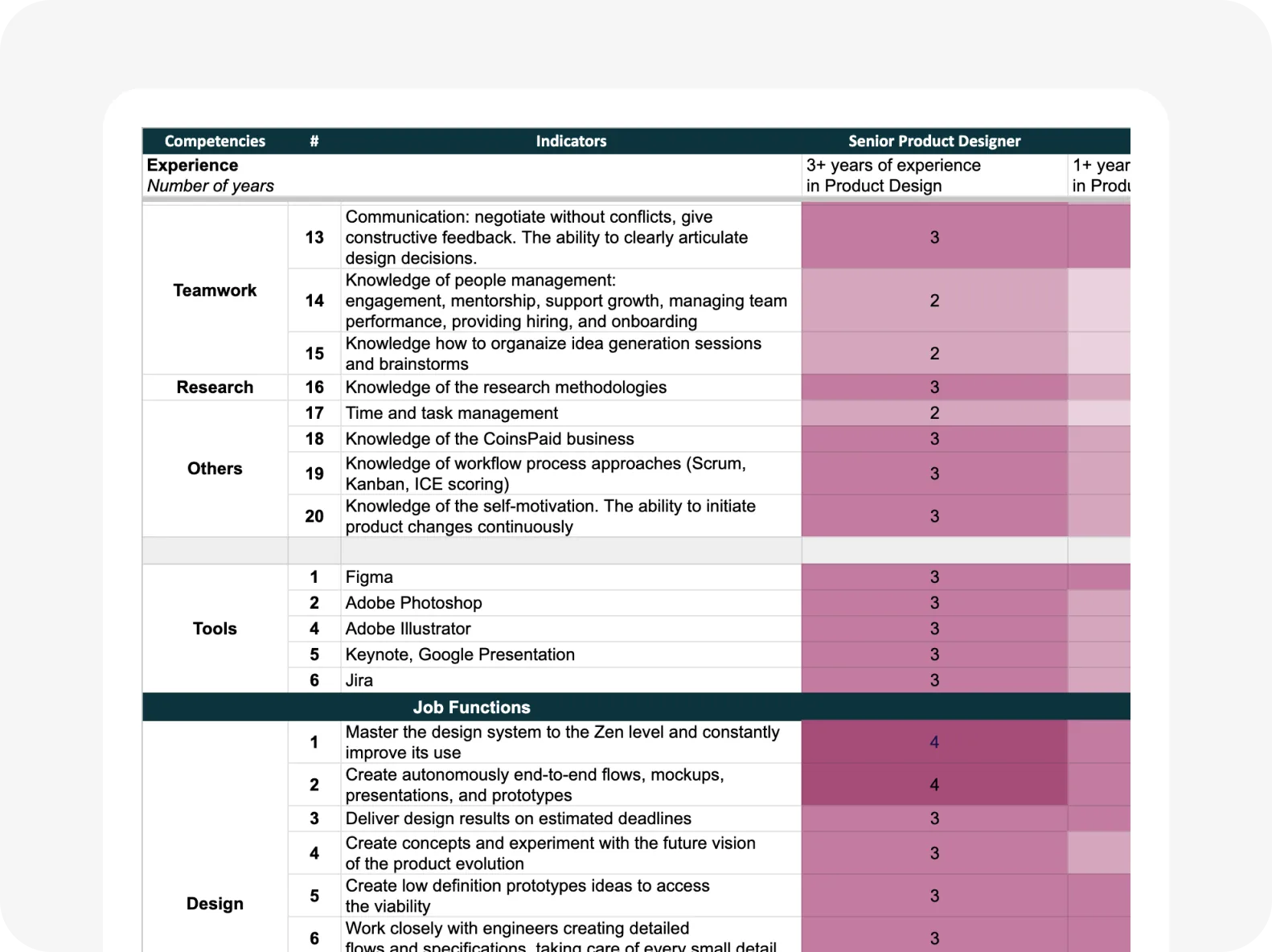
Built a competency matrix: 4 career levels, 6 areas of work, 53 indicators scored 0–4. Each designer knew exactly where they stood and what the next level looked like in concrete terms.
- 04
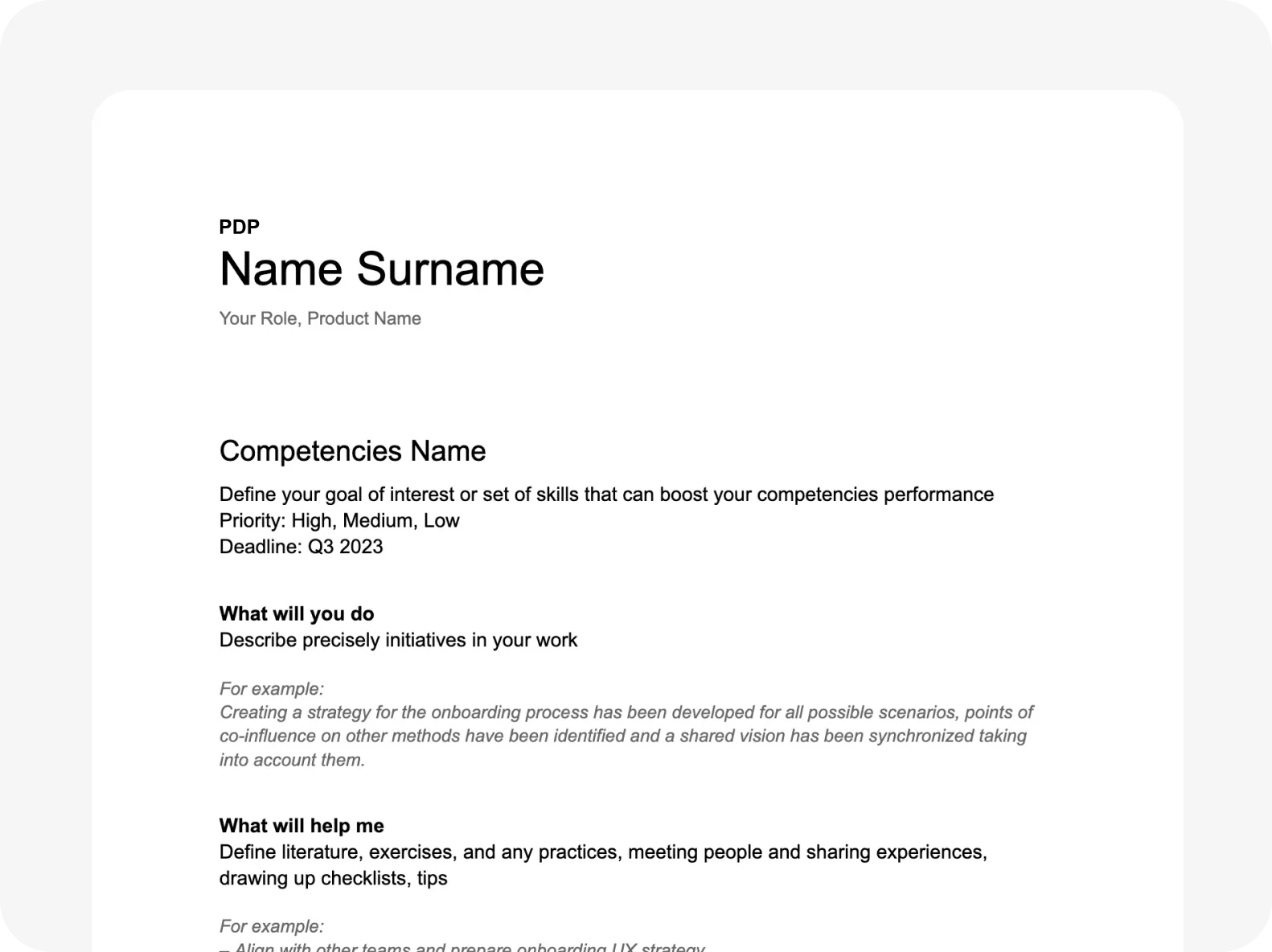
Paired it with a PDP template so every 1-on-1 had something concrete to work from.
Results
- 01
Built a design process from zero: 7 stages, mandatory gates, results review after every launch. Features stopped shipping without a design review. Work started with discovery, not Figma.
- 02
Connected design and engineering: every Figma component linked to its Storybook counterpart. Annual surveys confirmed it — less back-and-forth, fewer discrepancies at handoff.
- 03
Sold the business a dedicated DS team: designer, two frontend engineers, QA, and release manager. The design system stopped being a side task competing with feature deadlines.
- 04
Built a hiring system: job spec, structured scorecard, Confluence onboarding, 53-indicator competency matrix across 4 levels.
Takeaway
The design process was adopted by designers but never standardized across product pipelines. Teams came with tasks in different formats, and designers filled in the gaps. The pattern was consistent. Building the infrastructure wasn’t enough. It needed to be integrated into how the whole company worked, not just how the design team worked.