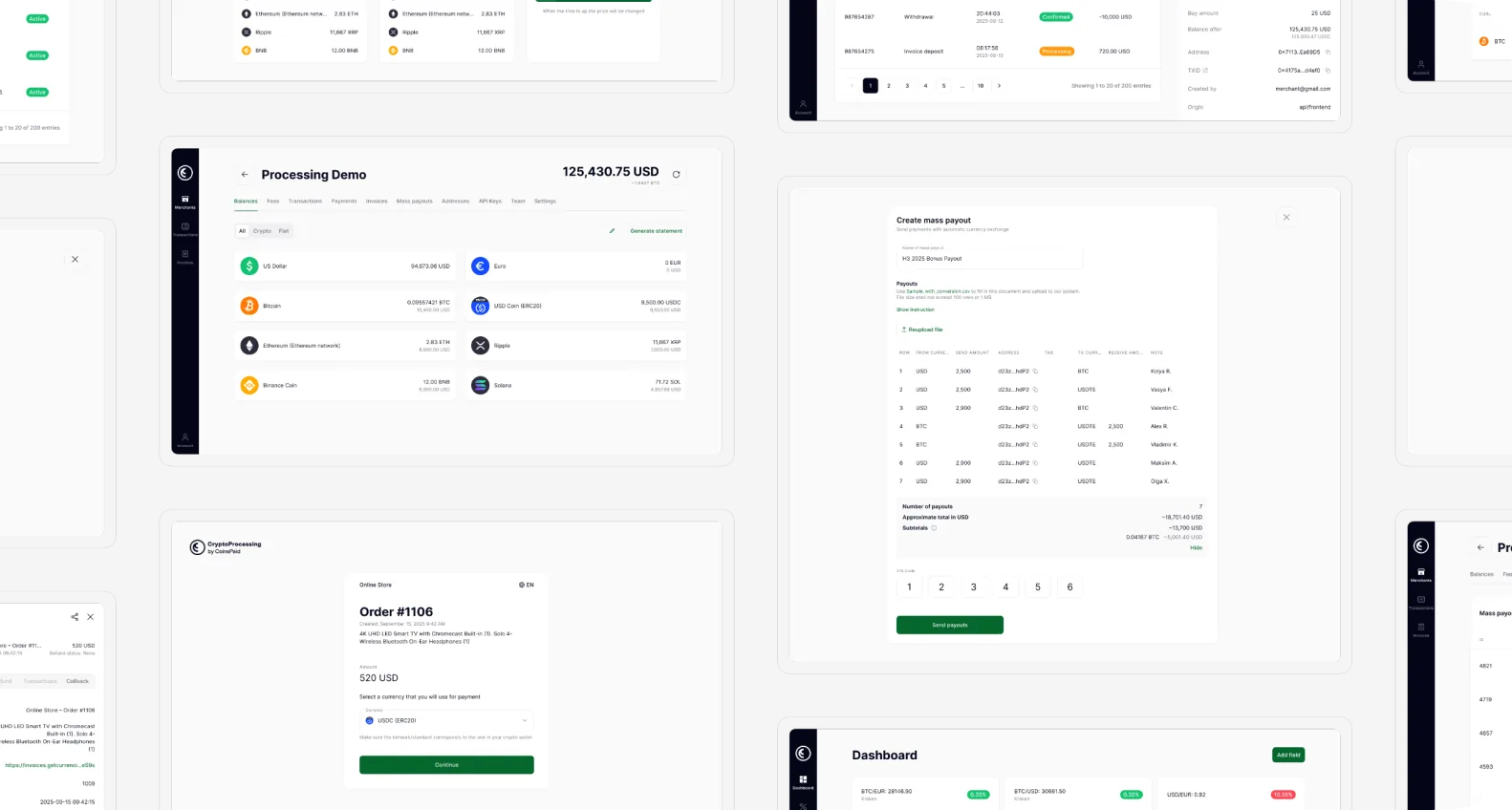
Role
Lead Product Designer
Year
2023–2024
Led the redesign for end-user crypto payment form
The invoice product generated 16% of CoinsPaid's deposit revenue on just 6% of deposit volume.
It was the most profitable part of the business, and almost no one was investing in it.
Users arrived at the payment form unfamiliar with crypto: no guidance, no fee breakdown, no way to recover from a mistake.
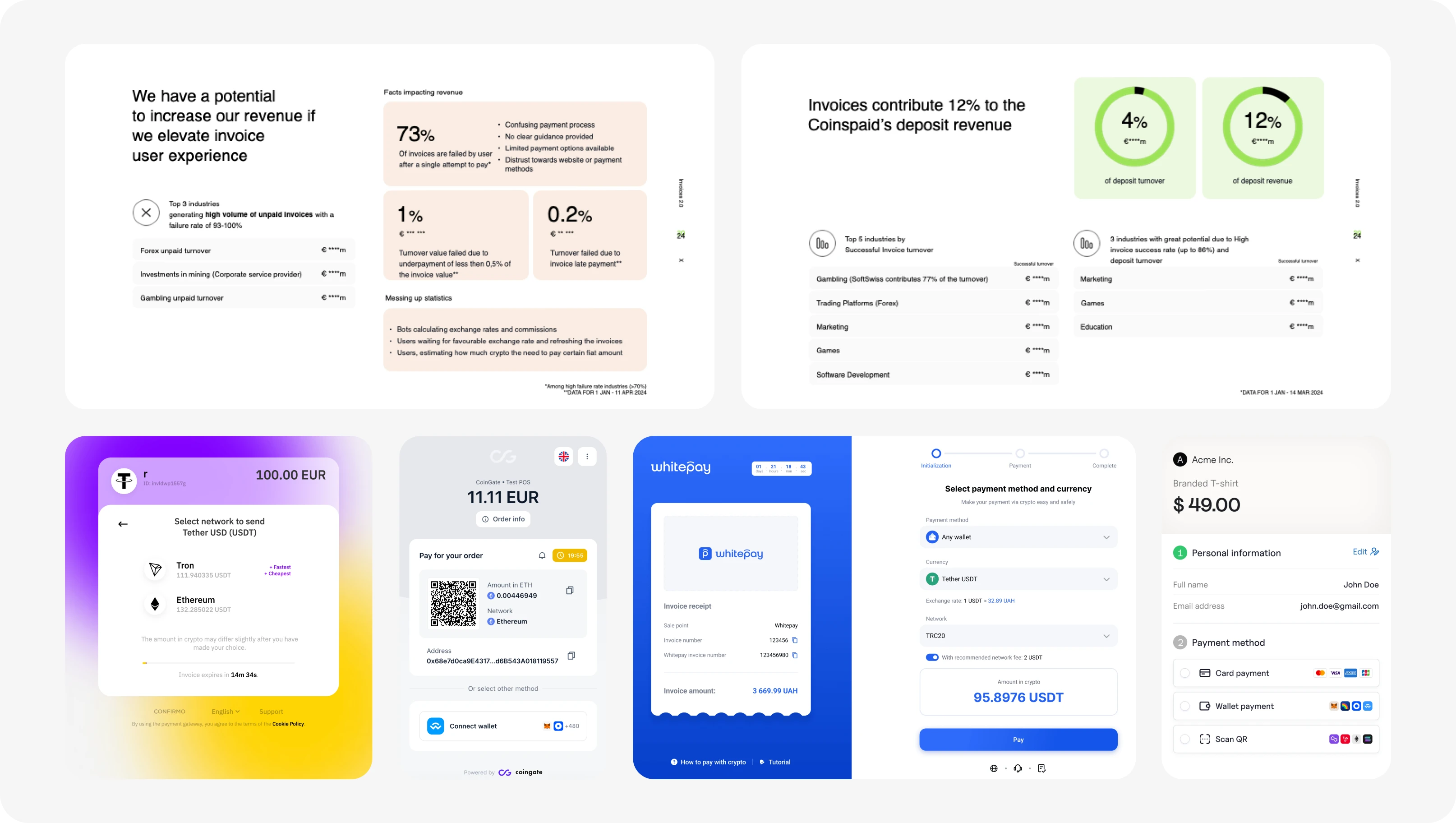
67% of invoices in high-failure industries ended after one attempt.
Challenge
Clients
- 01
67% of invoices abandoned after one attempt in high-failure industries. Users didn't come back.
- 02
A 15-minute countdown with no margin for error. Competitors offered 60 minutes.
- 03
No merchant branding, no fee guidance, no network selector. For anyone new to crypto, the form looked like a trap.
Business
- 01
Invoices contribute 16% to CoinsPaid's deposit revenue on just 6% of volume.
- 02
€1,349,000 in failed turnover from a 4% slice of invoices underpaying by less than 0.7%.
- 03
New clients declined to integrate. One existing client switched to a competitor.
Discovery: following the money
- 01
Revenue data showed three types of loss: failed payments, support overhead, and compliance exposure. The third one was the surprise.
- 02
€193K in unrefunded funds sitting in processing accounts. Not a UX problem. An active AML and licensing liability that got worse every month nothing was done.
- 03
Audited 8+ features competitors had but we didn't: recurring payments, live exchange rates, branded payment pages, transparent fee breakdowns, post-purchase refunds, adjustable error handling, extended timers.
- 04
Every gap had a documented lost lead or churn risk.
Before the redesign
- 01
15-minute timer. No branding. No fee guidance. No network selector. No refund path.
- 02
For anyone new to crypto, the form looked like a trap.
- 03
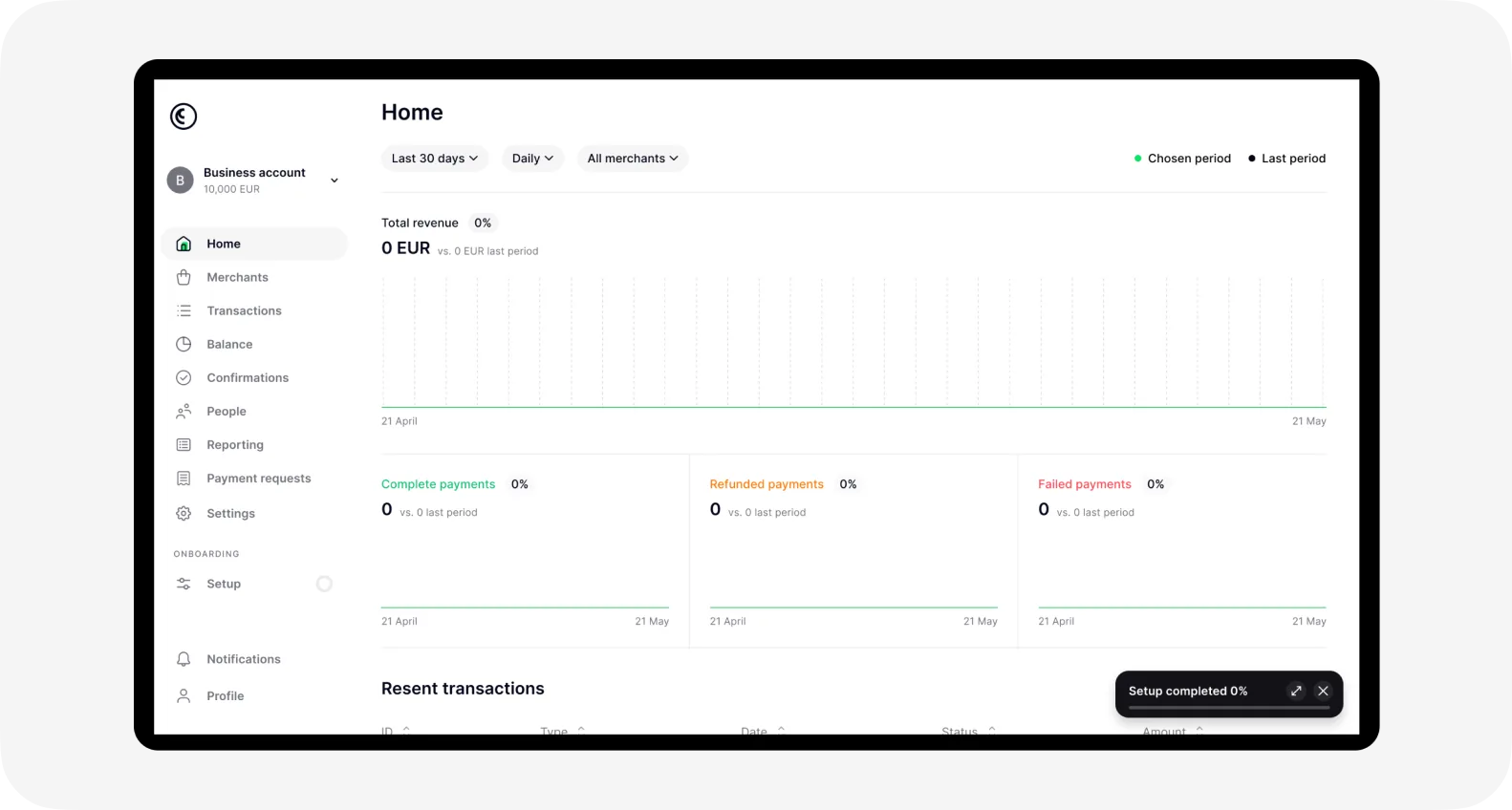
A transaction list in merchant account with no actions. No refunds, no settings, no recurring payments. Anything outside a standard payment meant a support ticket.
- 04
Three named prospects declined to integrate. One client switched to a competitor.
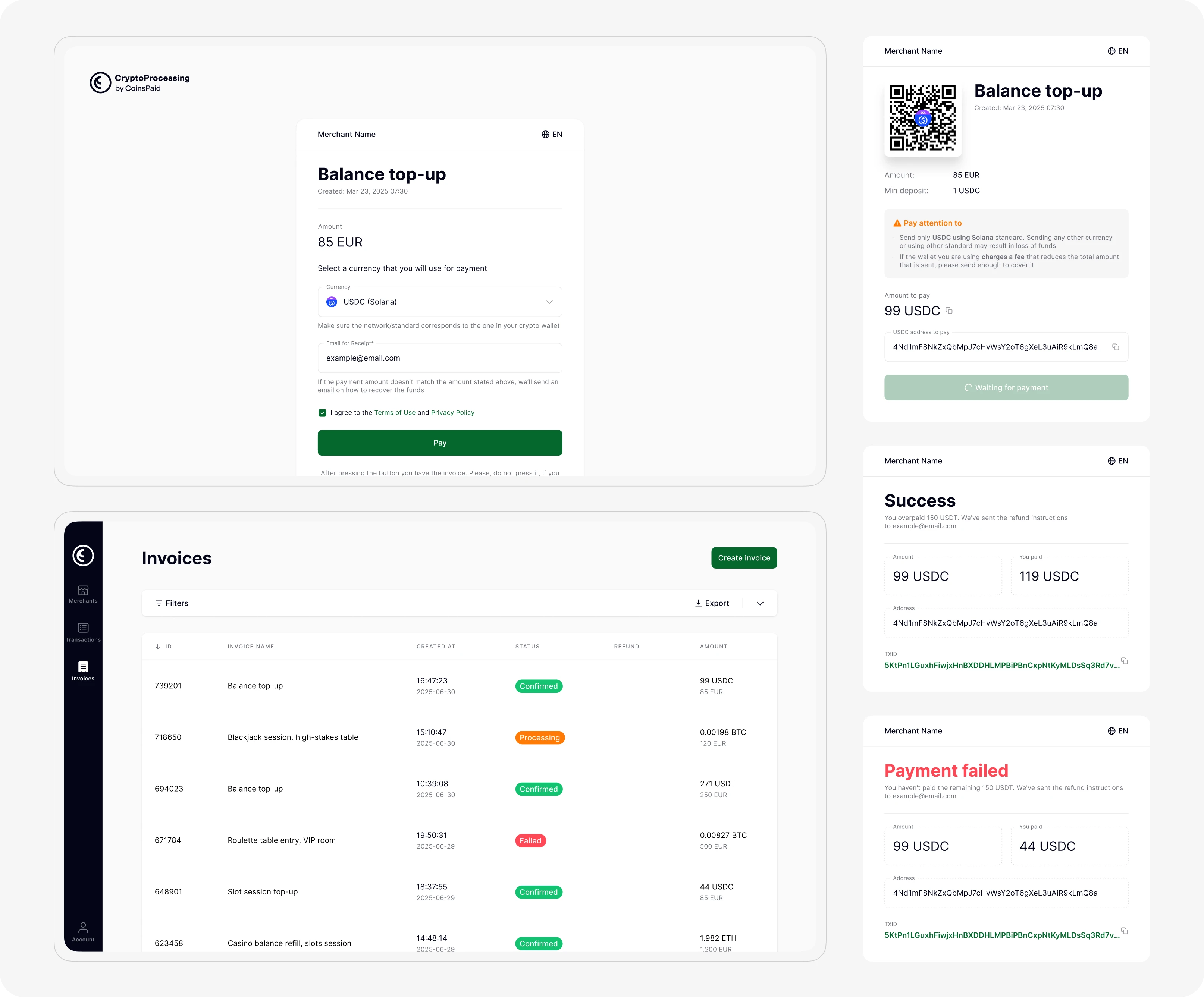
What changed for end users
- 01
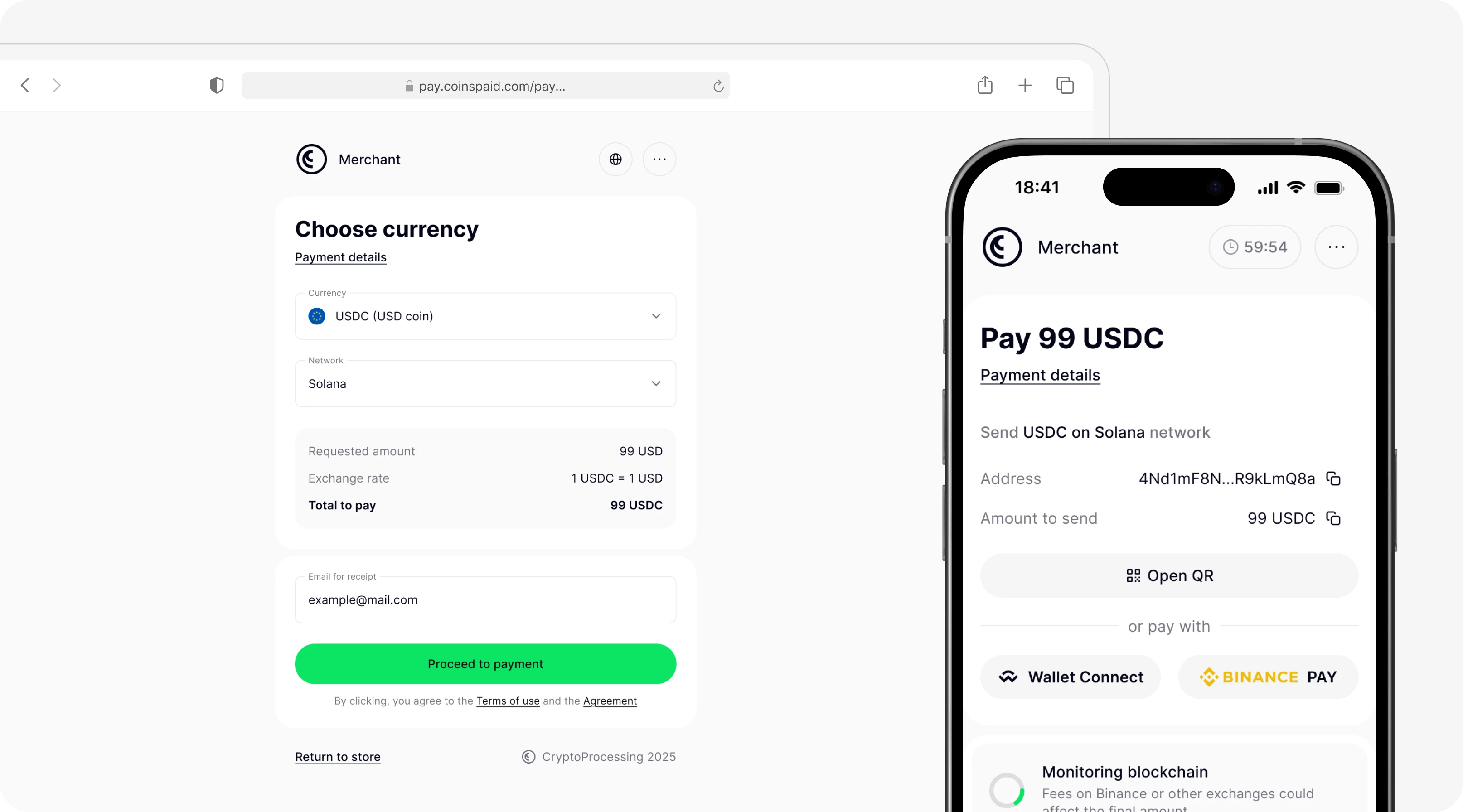
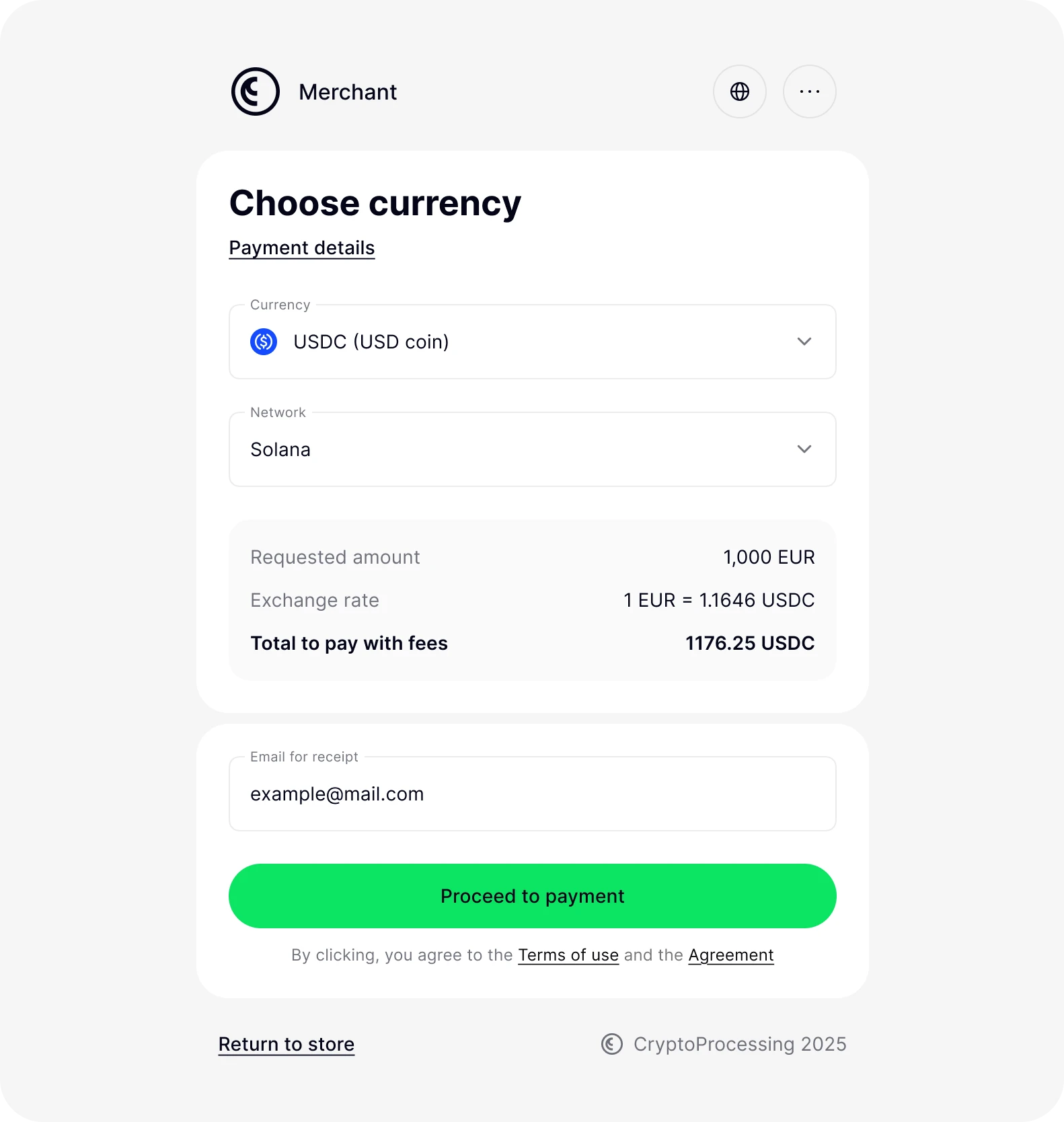
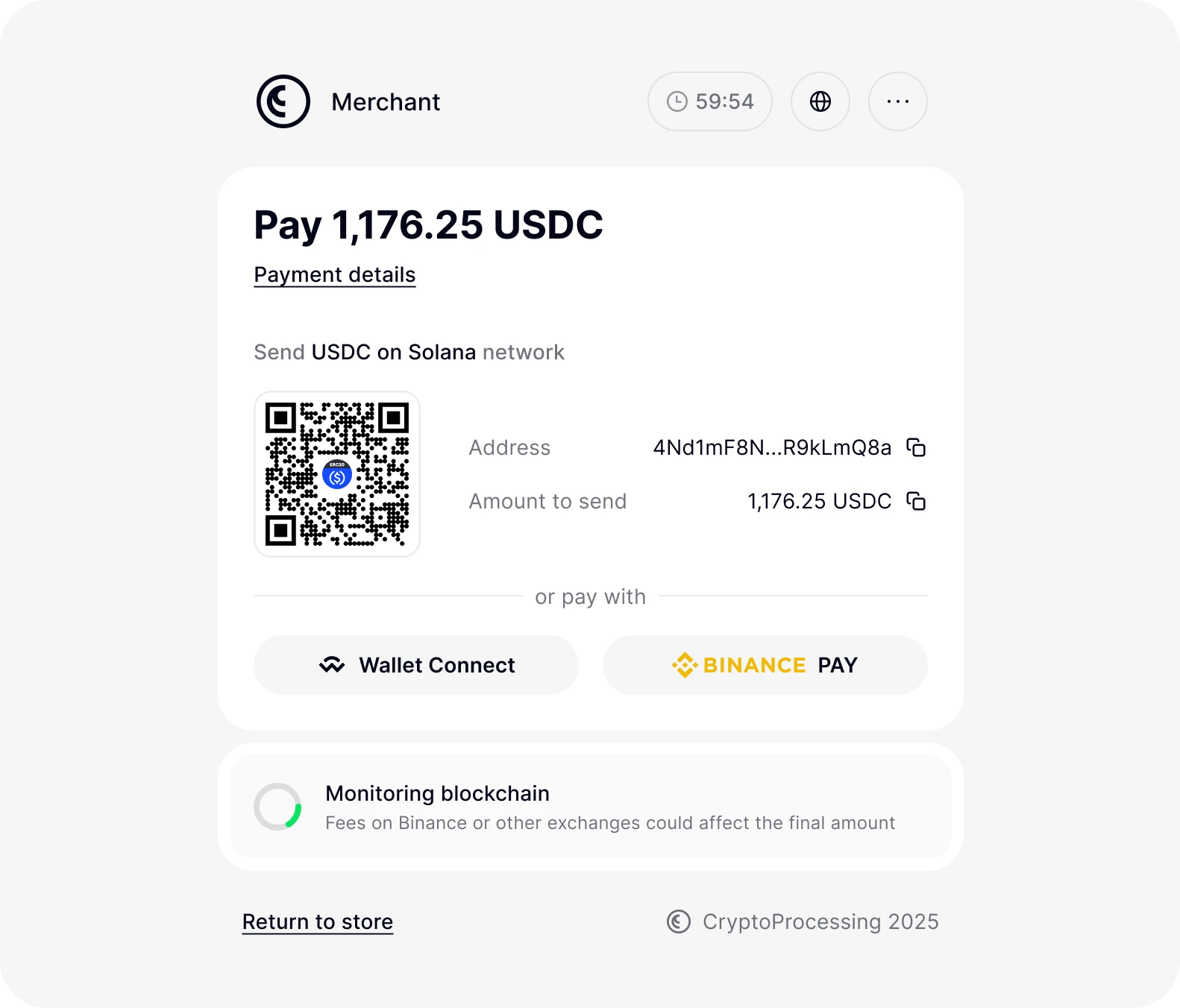
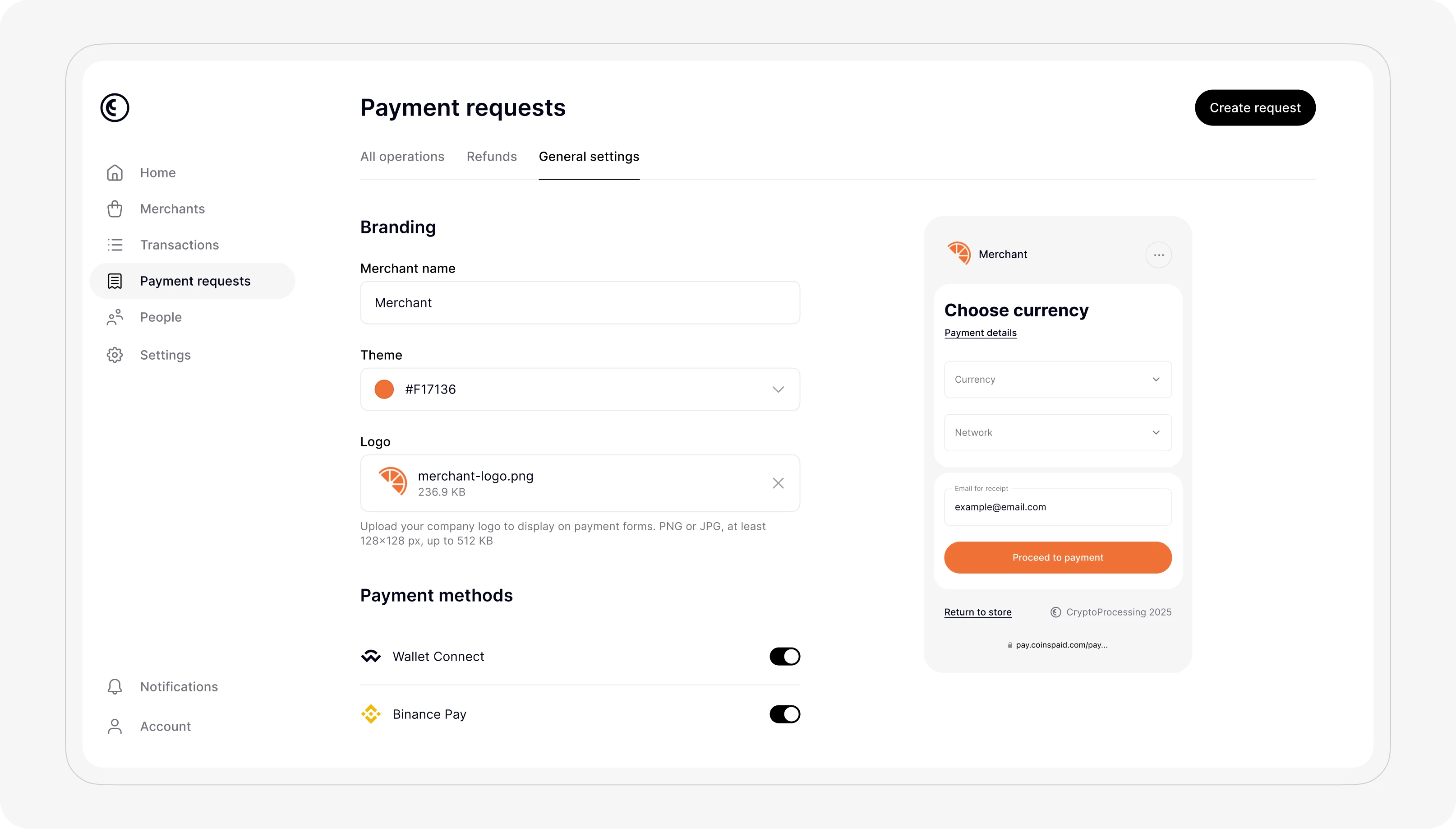
Let merchants customize the payment page with their branding. A familiar environment signals legitimacy to users who've never paid in crypto before.
- 02
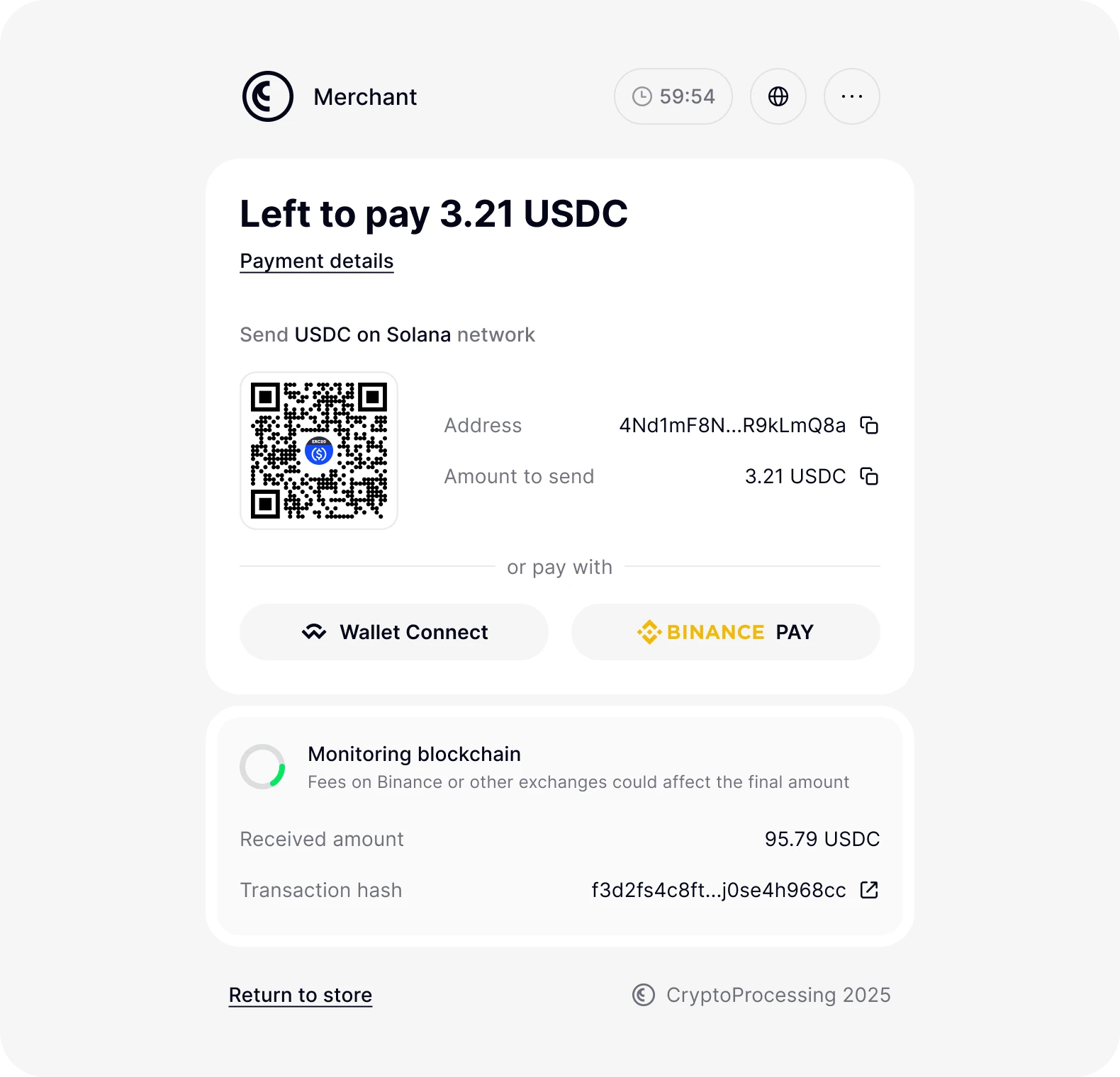
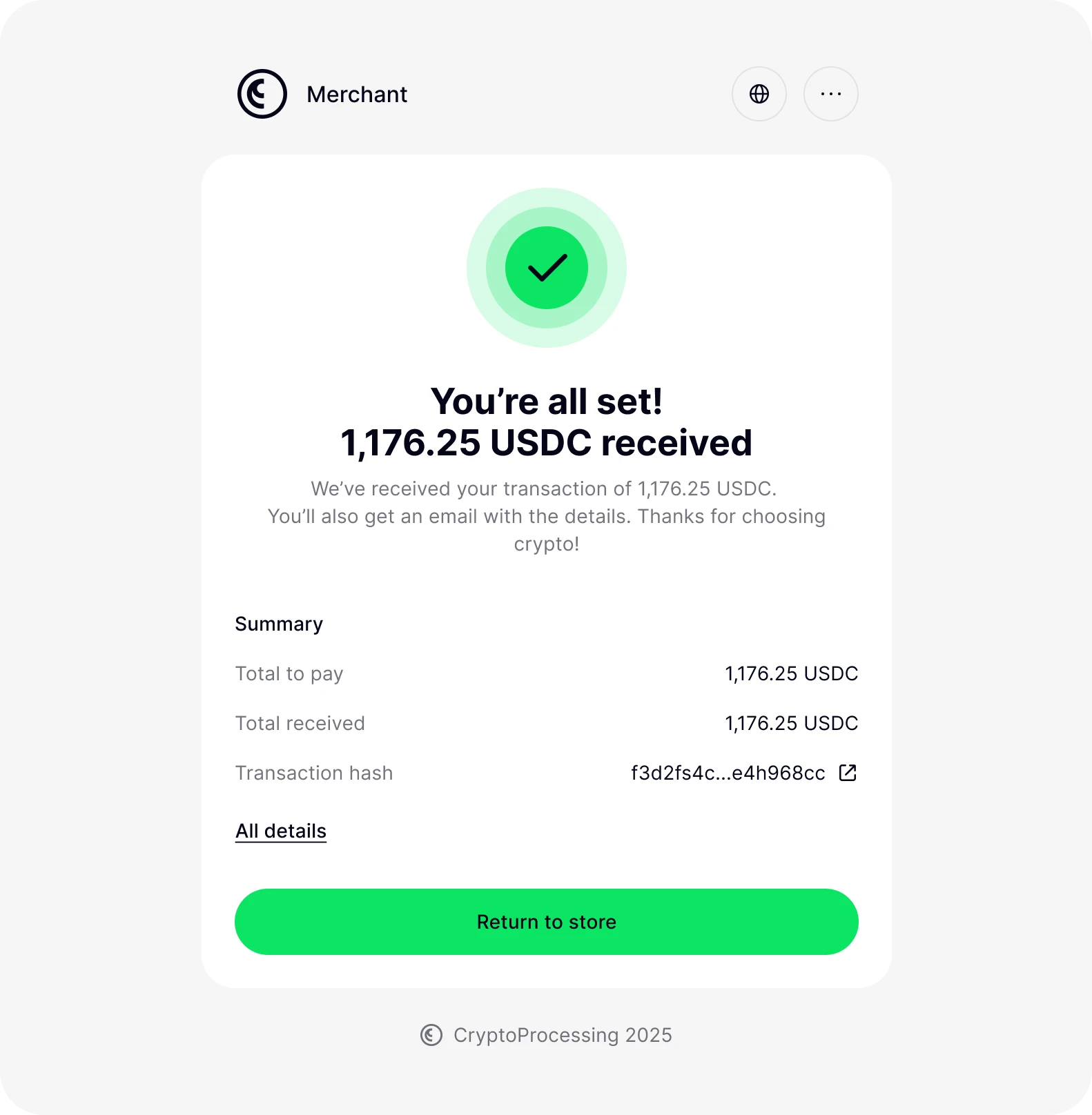
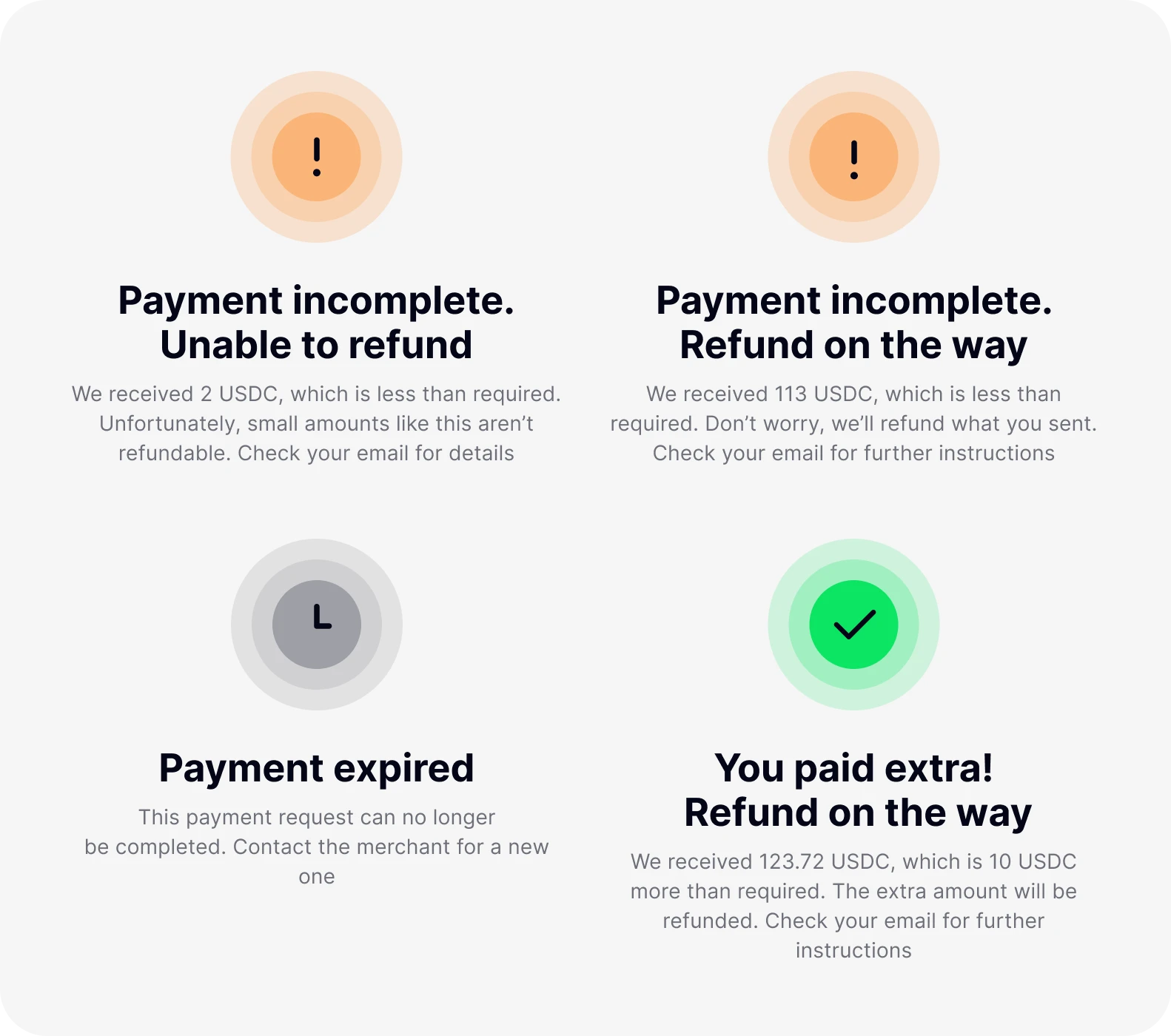
Rewrote the copy and restructured visual hierarchy so the next required action is always clear.
- 03
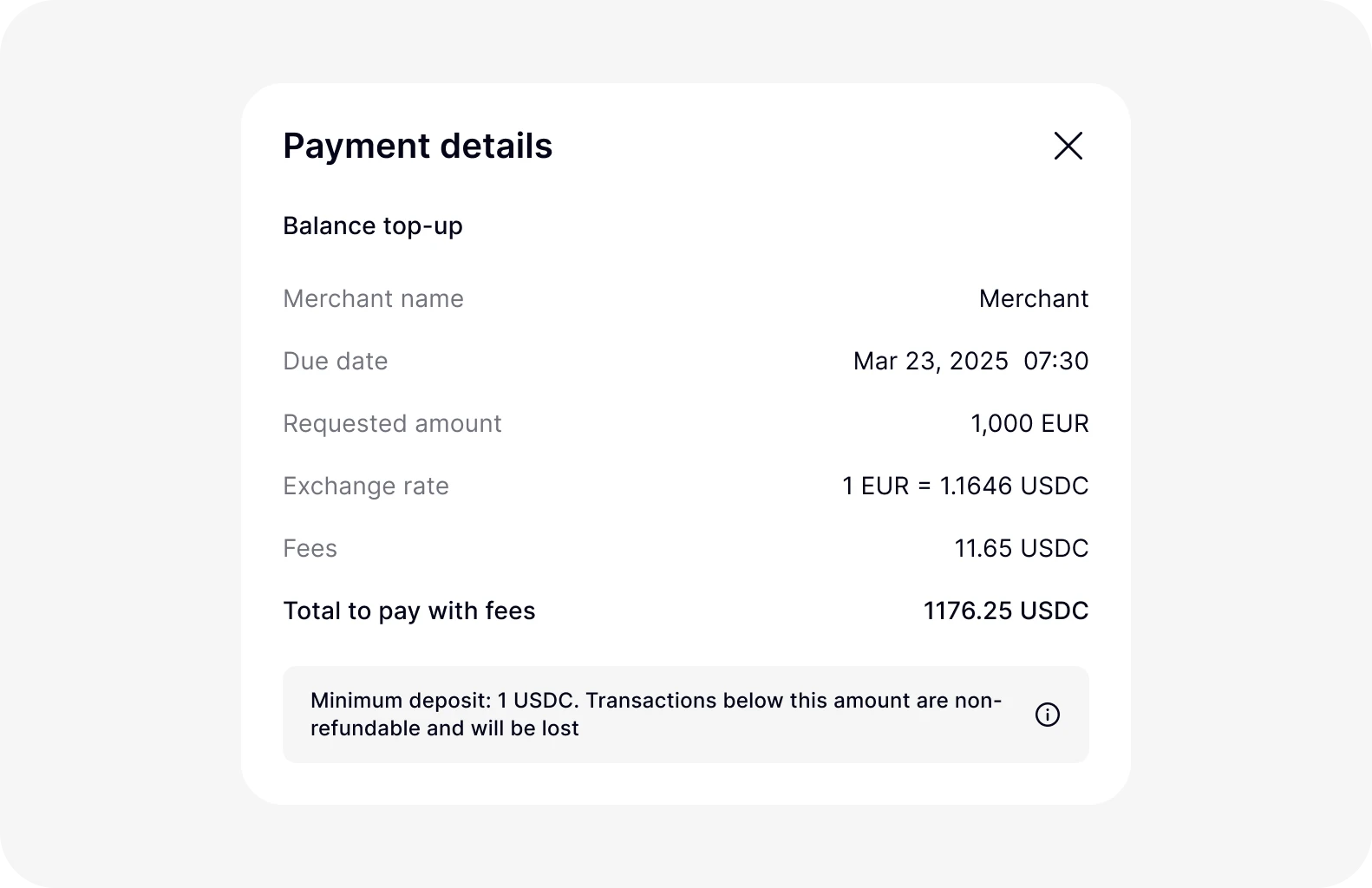
Added wallet fee guidance before sending and a way to top up small shortfalls instead of failing silently. Merchants got a configurable tolerance threshold.
- 04
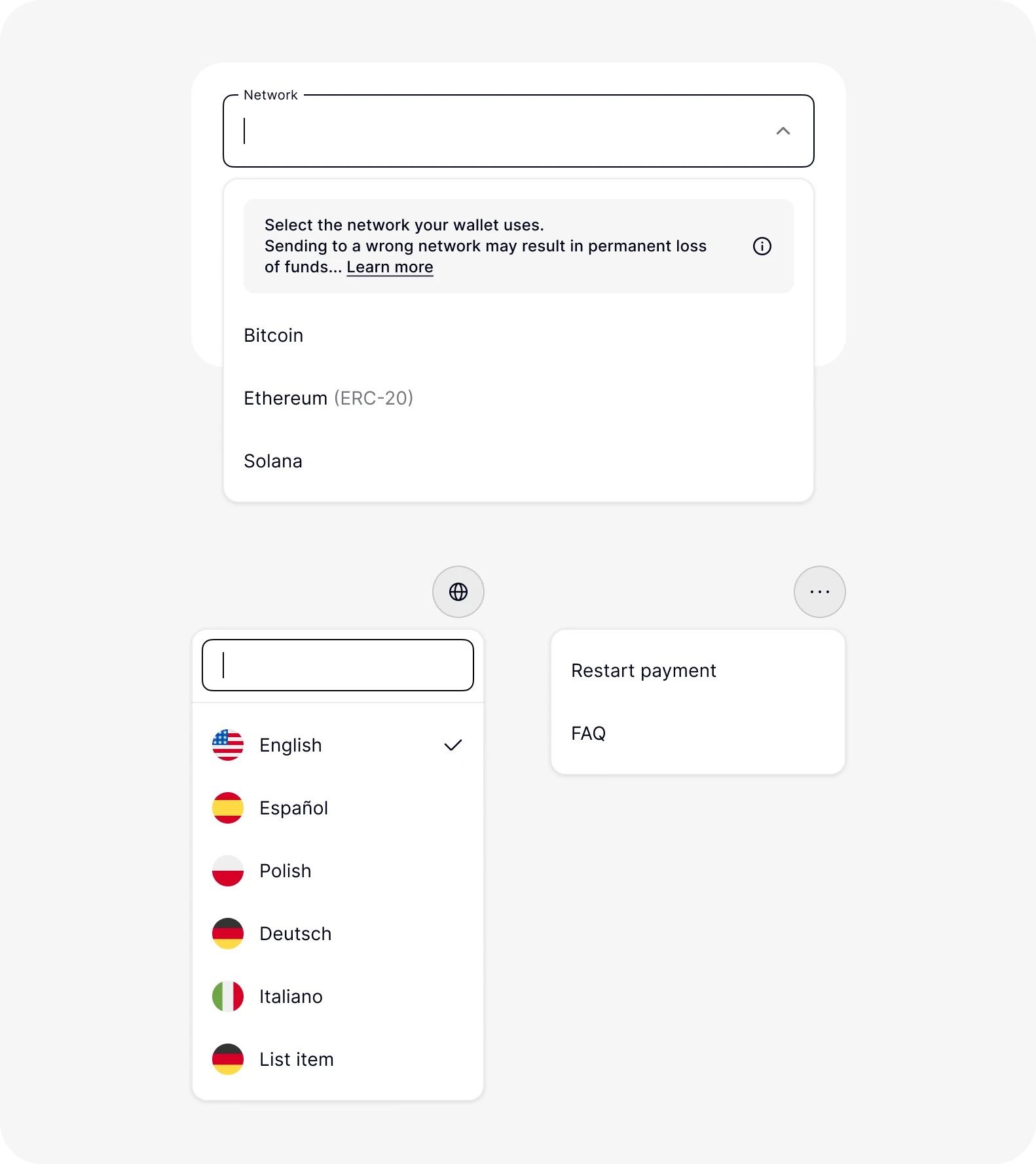
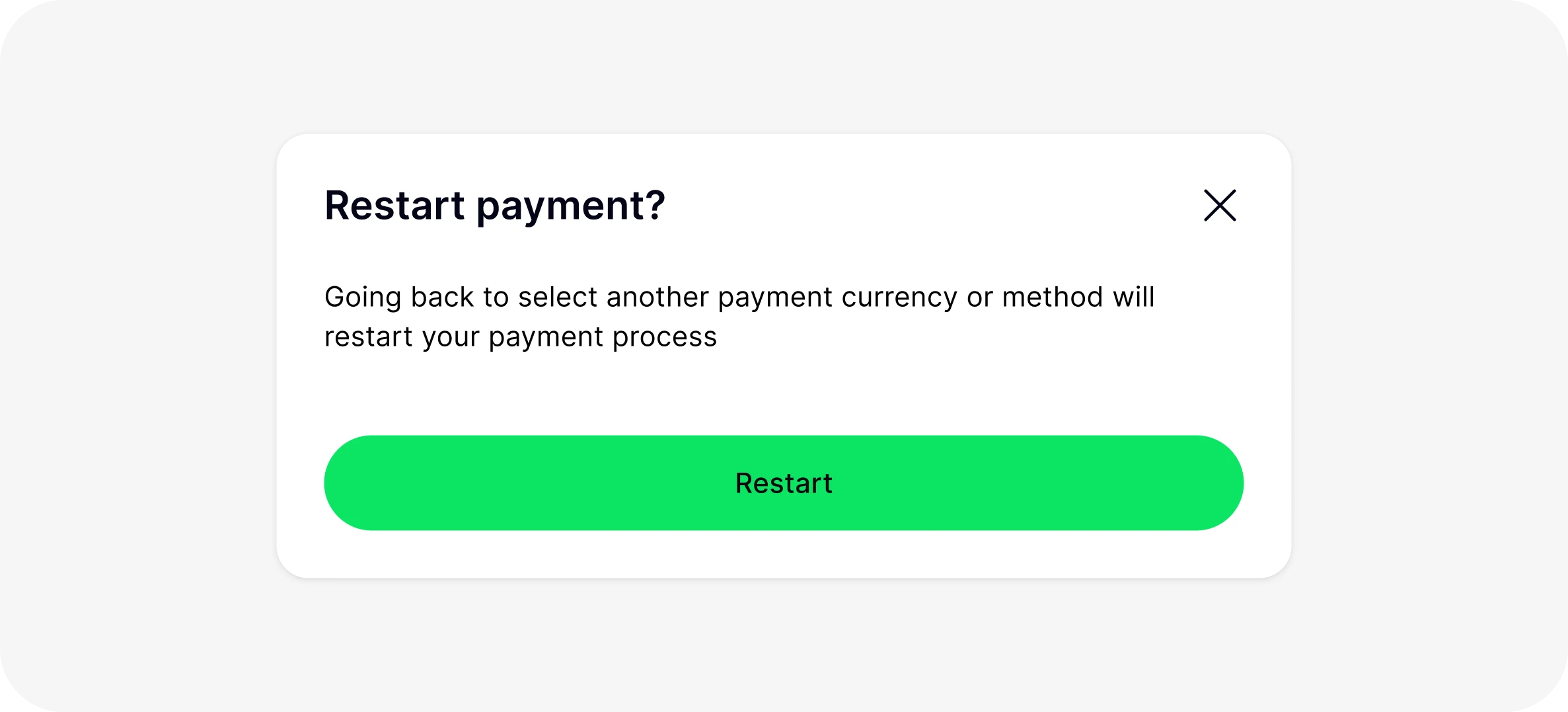
Added a network selector with validation before confirmation. One field eliminated an entire category of unrecoverable failures.
- 05
Extended the payment window from 15 minutes. Enough time to find a wallet, check the amount, and send without pressure.
- 06
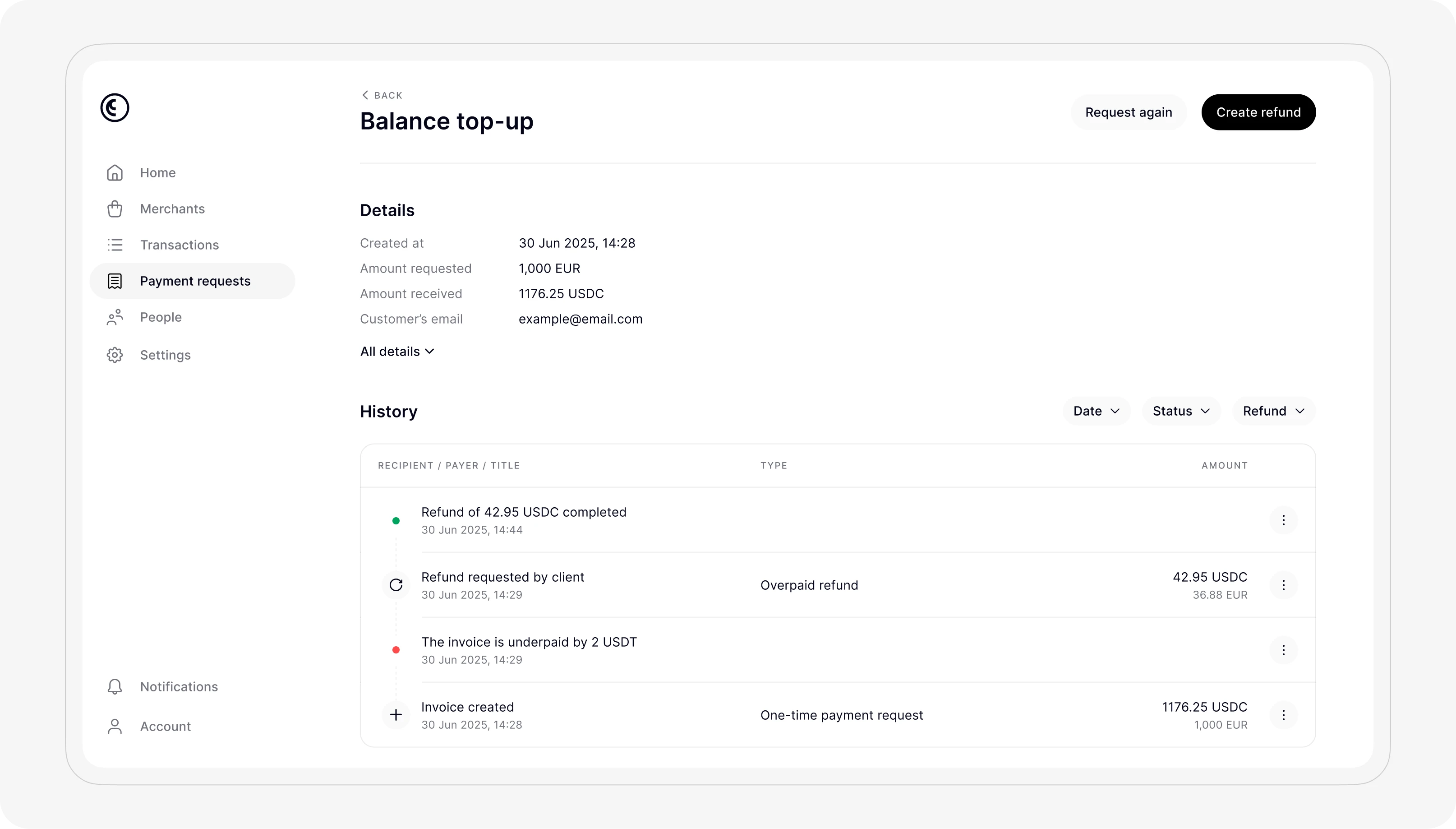
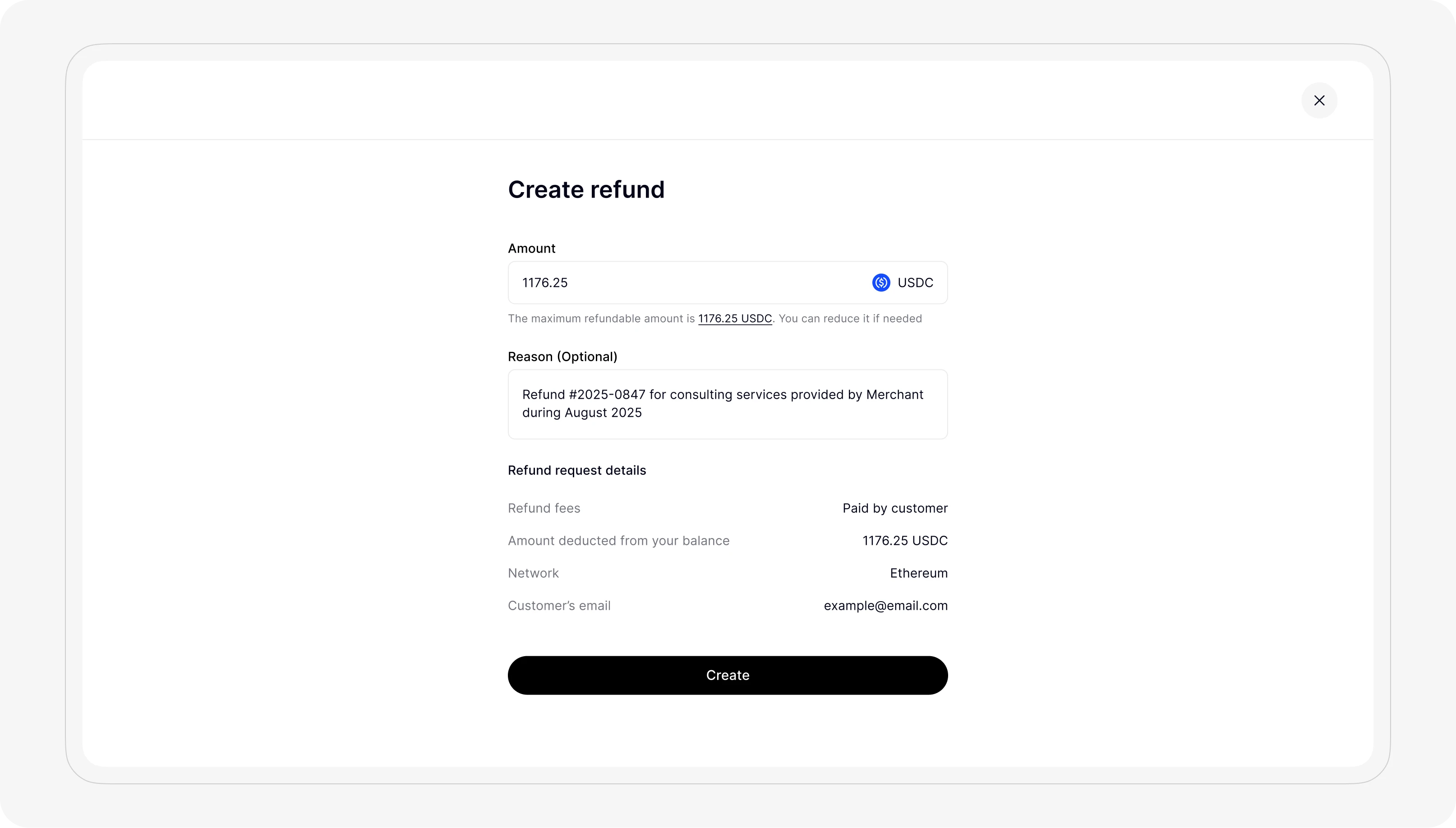
Gave users a self-service refund flow, resolving the €193K sitting in unresolved funds without contacting support.
- 07
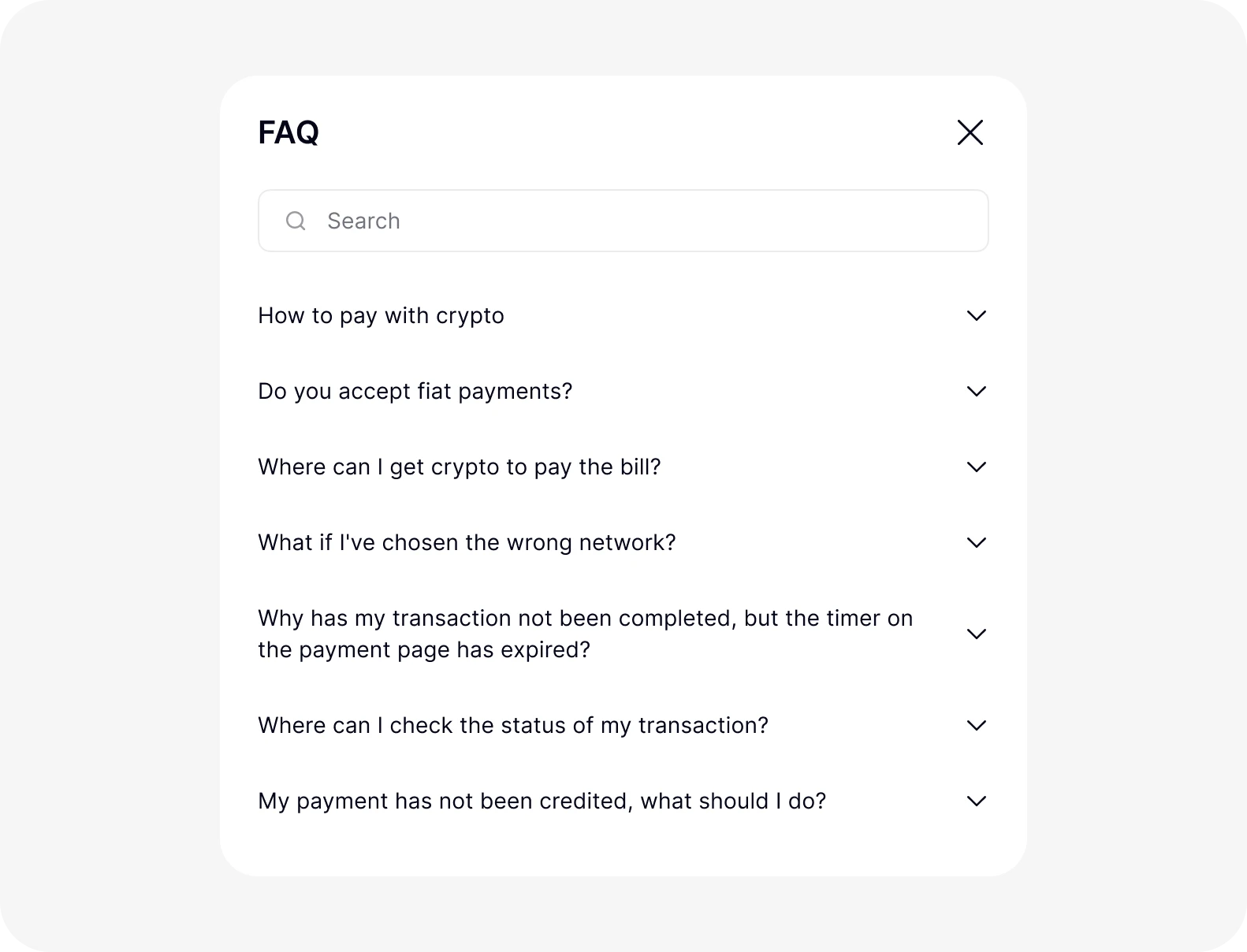
Added contextual tips at each step: network explanation, fee visibility, confirmation guidance.
What changed for merchants
- 01
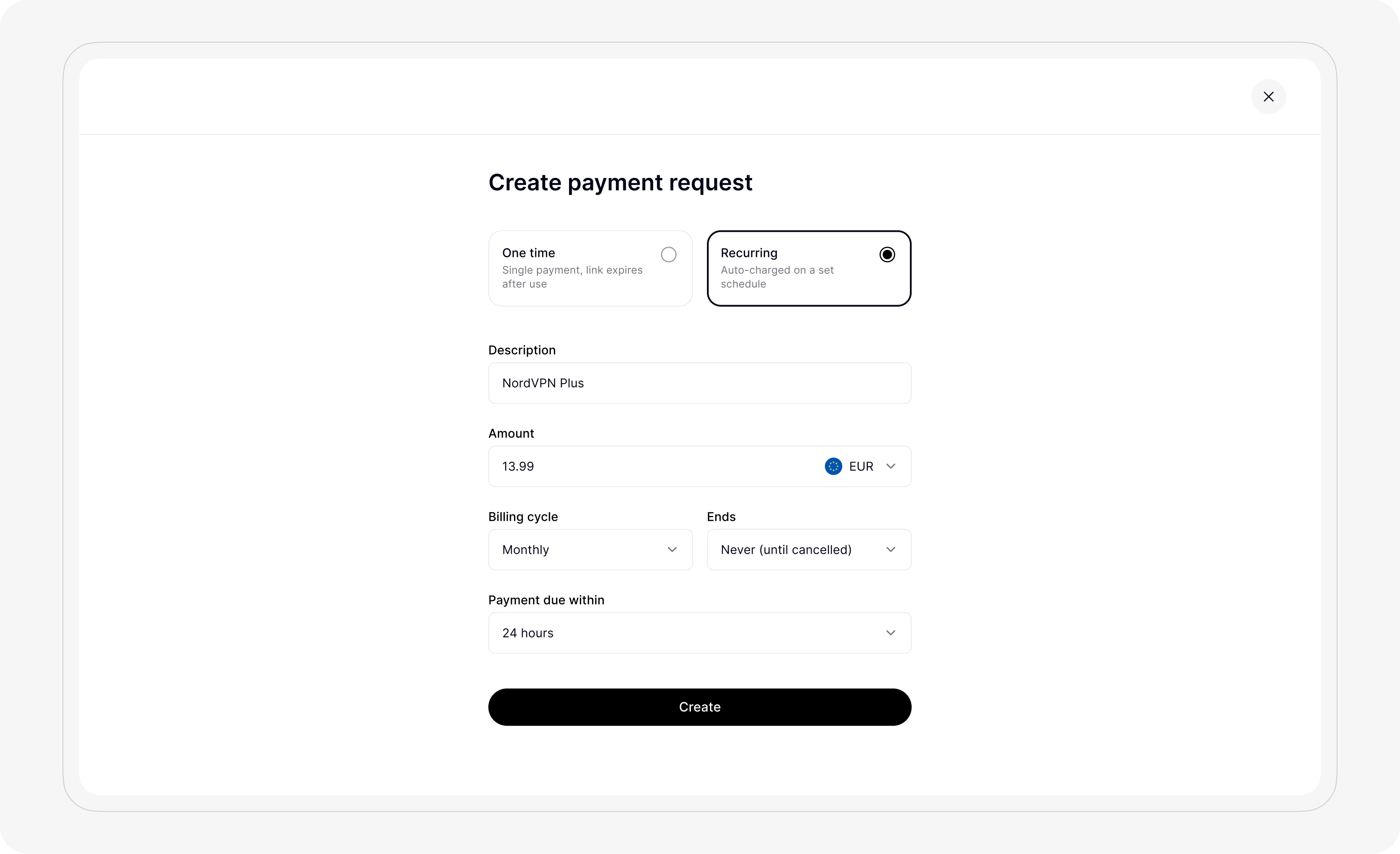
Added recurring payments for subscription-model merchants. A documented requirement from prospects who declined to onboard without it.
- 02
Gave merchants a self-service refund flow. No more involving the CoinsPaid team, and the €193K compliance liability stopped growing.
- 03
Built a unified settings layer covering branding, default currency, fee ownership, and account preferences. All without contacting support.
- 04
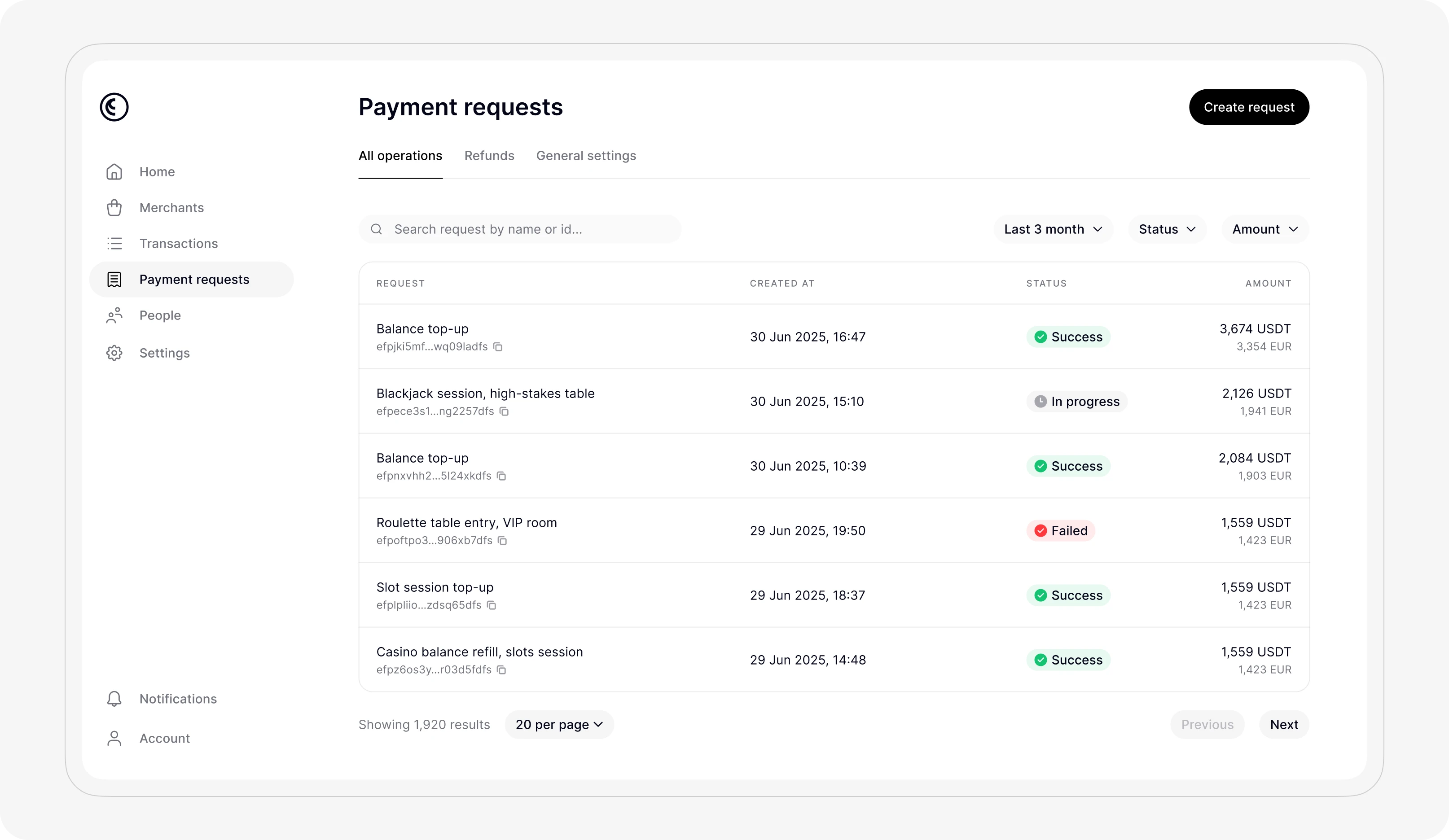
Redesigned the merchant interface: denser layout, better filtering, clearer status signals. Established the design language that carried into the full processing platform redesign.
Quantitive tests with real users
- 01
Ran quantitative testing on Pathway before the stakeholder pitch.
- 02
Four task types: first-click accuracy on the payment form, error recovery when sending the wrong currency, paying the correct amount with a wallet fee in play, trusting a branded payment page after arriving from a merchant's site.
- 03
Task success rates were high across all four scenarios. All three core failure modes from the old flow were resolved: trust, commission blindness, wrong network.
Results
- 01
Pitched the full vision to the CEO and got it approved. The most profitable product in the business finally had a roadmap and investment.
- 02
Validated the redesigned flow with real users on Pathway before the pitch. All three core failure modes resolved in testing: trust, commission blindness, wrong network.
- 03
Scope approved: 7 feature areas across the end-user payment flow and merchant dashboard.
Takeaway
The Pathway research validated the redesigned flow before the pitch. What it couldn't validate was whether the design would hold at scale after shipping. Next time: push for a confirmed ship date and a clear metric set to track after the first feature launches, not just after the prototype is tested.